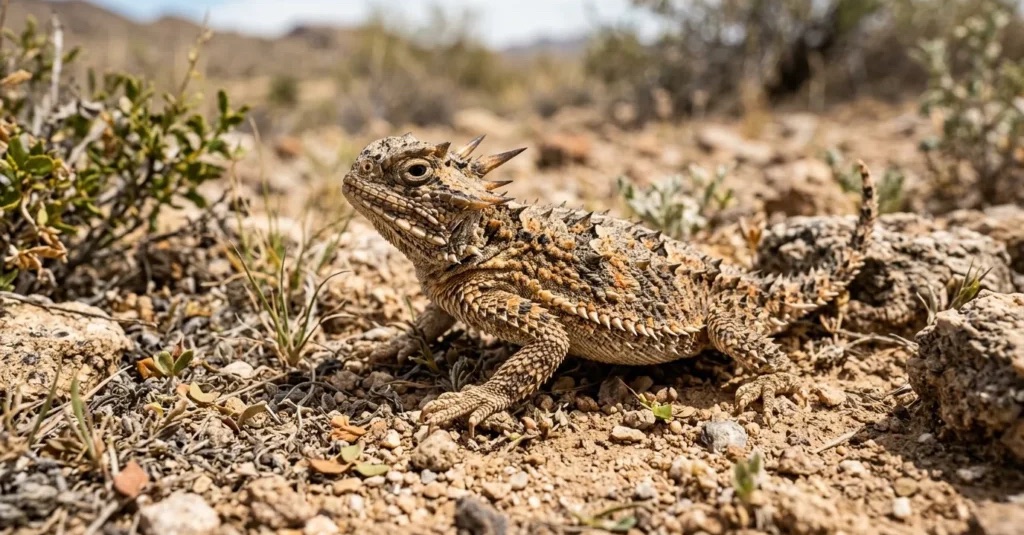
This animal is a reptile that lives in the desert or semi-arid environments. Their most unique feature, horns, are on their heads and highly noticeable. Their bodies are full of spines.
Horned Lizard – The “Thorny” Desert Survivor
Horned Lizard is a small, spiky-looking reptile found mainly in North and Central America. Despite its fierce appearance, it is harmless to humans and is often called a “horned toad” (though it is not a toad at all).
What Is a Horned Lizard?
Horned lizards are reptiles that belong to a group of lizards adapted for life in dry, sandy environments. Their body is flat and round, helping them blend into the ground and avoid predators.
They are best known for the crown-like spikes or “horns” on their heads.
Appearance
Horned lizards have a very unique look:
Spiky horns on the head Flattened, round body Rough, sand-colored skin for camouflage Short tail Wide stance close to the ground
Their appearance helps them look like part of the desert floor.
Defense Mechanisms
Horned lizards have some unusual survival tricks:
1. Camouflage
They blend perfectly with sand and rocks to avoid detection.
2. Puffing Up
They can inflate their bodies to look larger and more intimidating.
3. Blood-Squirting Defense (Most Famous)
Some species can shoot blood from their eyes when threatened. This confuses predators and tastes foul to dogs and coyotes.
Habitat
Horned lizards live in:
Deserts Dry grasslands Semi-arid regions Rocky scrublands
They prefer warm, sandy environments where they can hide easily.
Diet
Unlike many lizards, horned lizards are specialized feeders. They mainly eat:
Ants (especially harvester ants) Small insects Occasionally beetles
Some species can eat thousands of ants in a single day.
Behavior
Horned lizards are:
Slow-moving Mostly solitary Day-active (diurnal) Excellent at remaining still to avoid detection
When threatened, they often freeze instead of running.
Interesting Facts
They are sometimes called “horny toads” because of their shape Their blood-squirting defense is rare among reptiles They can remain motionless for long periods Some species are declining due to habitat loss and invasive ants They rely heavily on camouflage rather than speed
The horned lizard shows that survival is not always about strength or speed. Sometimes, the best defense is blending in, staying still, and having a few surprising tricks when danger gets too close.
 ☄️WELCOME TO FACENOTEE.COM🕳️👍🏿
Leave a comment