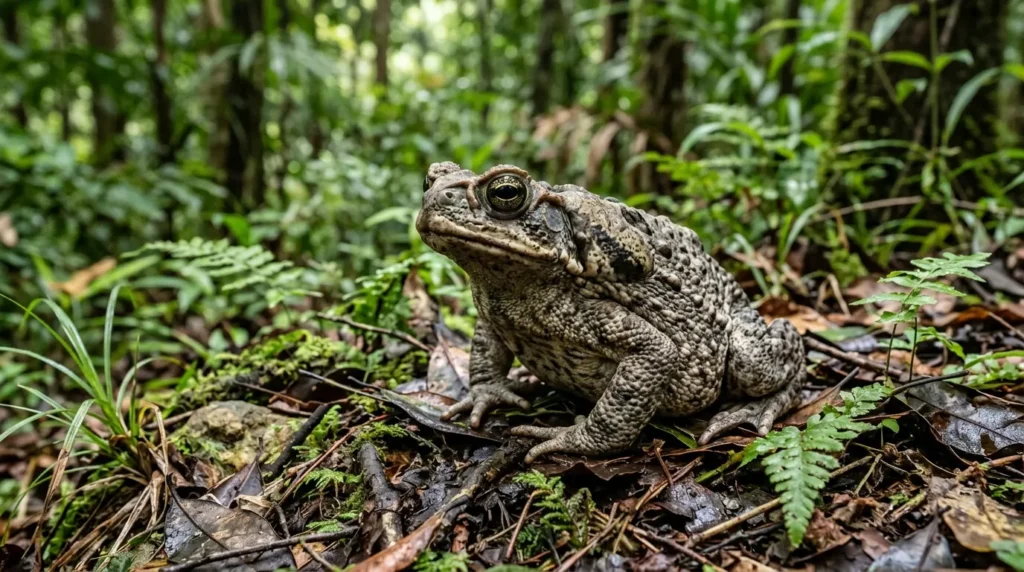
Warty? Check. Poisonous? Check. Dumb? We’ll see. Animal fact of the day – A group of cane toads is called a knot. They can look downright scary with their downturned mouths and hooded eyes and can reach up to 10” in body length. Gross.
Cane Toad – One of the World’s Most Notorious Amphibians
Cane Toad is a large, hardy toad originally native to Central and South America. It is famous today not for being rare or cute, but for becoming one of the most successful and controversial invasive species in the world.
What Is a Cane Toad?
The cane toad is a ground-dwelling amphibian that thrives in warm, tropical environments. It was introduced to several countries to control agricultural pests—but that plan backfired in many places.
It is highly adaptable and can survive in forests, grasslands, farms, and even urban areas.
Appearance
Cane toads are easy to recognize:
Large, warty brown or gray body Thick, heavy shape Prominent poison glands behind the eyes Short legs (not great jumpers) Dry, rough skin
They are much bigger than many native toads in areas they invade.
Why It Became Famous
Cane toads were introduced to places like Australia to control sugarcane pests. Instead of helping, they:
Spread rapidly Ate native insects and small animals Poisoned predators that tried to eat them
This made them one of the most well-known invasive amphibians.
Defense Mechanism
Cane toads are not aggressive, but they defend themselves with poison:
Their skin releases a toxic substance called bufotoxin Predators like snakes, birds, and mammals can get very sick or die after eating them Even handling them carelessly can be harmful to pets
This chemical defense is their main survival strategy.
Diet
Cane toads are opportunistic feeders. They eat almost anything they can swallow, including:
Insects Small reptiles Other amphibians Food scraps in human areas
This helps them survive in many environments.
Habitat
They are found in:
Tropical forests Grasslands Agricultural fields Urban gardens and drains
They prefer warm, moist environments and are often active at night.
Behavior
Cane toads are:
Mostly nocturnal Slow-moving on land Strong survivors in harsh conditions Solitary outside breeding season
They gather in large numbers near water during breeding.
Impact on Ecosystems
In places where they are invasive, cane toads cause problems:
They compete with native species for food They poison predators unfamiliar with them They spread quickly across large regions
This has led to serious ecological disruption in some countries.
Interesting Facts
They can lay thousands of eggs at once Tadpoles are also toxic They can survive long dry periods They have been known to invade both rural and urban environments Despite their reputation, they are not “evil”—just highly adaptable
The cane toad is a powerful example of how introducing a species into a new environment can have unexpected consequences. While it is often seen as a pest in some regions, it is simply a highly resilient survivor doing what it does best—adapt and spread.
 ☄️WELCOME TO FACENOTEE.COM🕳️👍🏿
Leave a comment