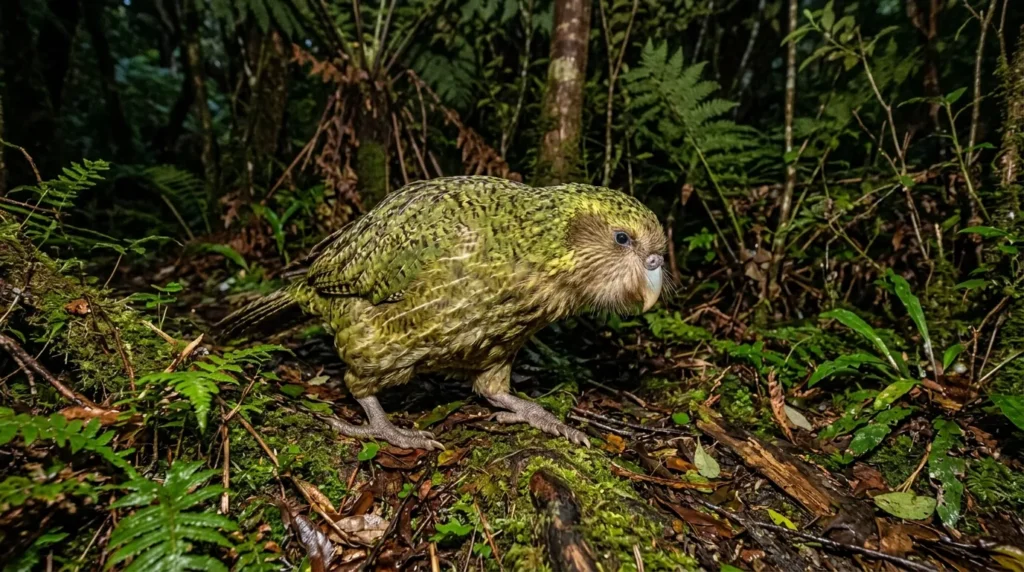
Popular Science calls them “quirky.” For those of you who aren’t in the know, which would include me until today, kakapos (aka parrot owl) are birds from New Zealand that don’t fly.
Kakapo – The World’s Rarest and Heaviest Parrot
Kakapo is one of the most unusual birds on Earth. It is a large, flightless, nocturnal parrot native to New Zealand, and it is critically endangered.
Unlike most parrots that fly and are active during the day, the kakapo lives a quiet, ground-based life in forests at night.
What Is a Kakapo?
The kakapo is a type of parrot that:
Cannot fly Lives on the ground Is active at night (nocturnal) Has a strong, musky smell
It is also the heaviest parrot in the world.
Appearance
Kakapos have a very distinctive look:
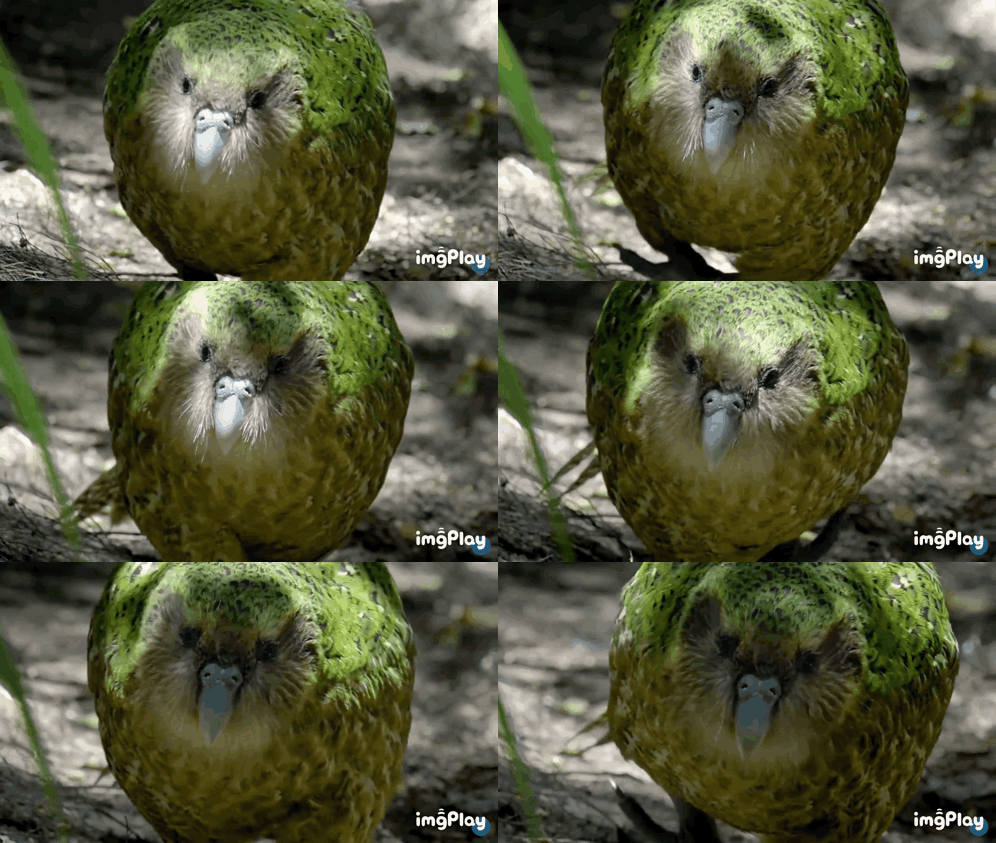
Moss-green feathers with yellowish tones A round, owl-like face Large beak for a parrot Short wings that are not used for flight Strong legs for walking and climbing
Their appearance helps them blend into forest vegetation.
Why It Can’t Fly
The kakapo evolved in New Zealand, where there were originally few land predators. Because of this:
It did not need to fly to escape danger It became heavier over time Its wings became small and weak
Instead of flying, it walks and climbs trees.
Behavior
Kakapos are:
Gentle and curious Slow-moving Solitary for most of the year Very quiet (they do not chatter like other parrots)
Males make deep booming calls during mating season to attract females.
Habitat
Kakapos live in:
Dense native forests Islands of New Zealand (now protected reserves)
They spend most of their time on the ground but can climb trees for food.
Diet
They are herbivores and eat:
Leaves Seeds Fruits Flowers Tree bark
One of their favorite foods is the rimu fruit, which is important for breeding cycles.
Reproduction (Very Unique)
Kakapos have one of the most unusual breeding systems:
They breed only every 2–4 years Males gather in special areas called “leks” Males produce deep booming sounds to attract females Females raise chicks alone
This slow reproduction makes population recovery difficult.
Conservation Status
The kakapo is critically endangered due to:
Introduced predators like cats, rats, and stoats Habitat loss Very slow reproduction rate
Today, conservation teams in New Zealand carefully monitor and protect every known kakapo.
Interesting Facts
It smells like honey or flowers It can live up to 90+ years It uses camouflage instead of flight to survive Every known kakapo is individually named and tracked It is one of the rarest birds on the planet
The kakapo is a reminder of how unique evolution can be. It is a parrot that forgot how to fly, adapted to a peaceful world without predators, and now survives only through careful human protection. It is truly one of nature’s most extraordinary birds.
 ☄️WELCOME TO FACENOTEE.COM🕳️👍🏿
Leave a comment