I may be of the mind that no animal is truly dumb, but I’ll admit certain animalsare less like Einstein and more like Shaggy from Scooby-Doo. On the smart side, there are dogs that can bring you a soda or turn on the lights. On the dumb side, there are ostriches with walnut-sized brains.
We’d like to take you on a journey to meet the dumbest animals in the world. Animals like certain types of birds, toads, and sharks have questionable brain functions. Let’s just say they’re not the brightest crayons in the box.
like me, you might take offense to this article, but hopefully, you’ll realize there is a range of intelligence in animals just like there is in humans.
Dumbest Animals in the World
“Dumb” is such a strong word, especially when you’re talking about animals, but let’s just say some are smarter than others. When you think of smarties, you might think of “border collie” or “chimpanzee,” but did you know that some animals don’t even know when to come in from the rain?
Let’s meet some of the dumbest animals in the world. The bonus is they should make you feel really smart.
1. Panda
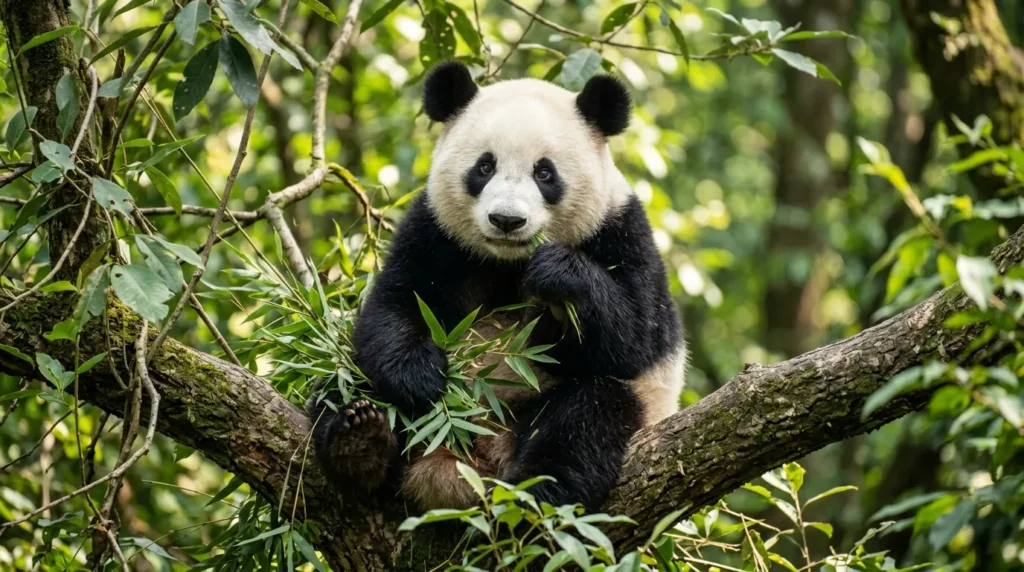
Pandas are the rarest bear species and rarely mate. It’s why there’s such a ruckus when one is born in a zoo. (You’d think Santa Claus was actually coming to town.) But does that make them dumb? It depends on whom you ask.
If you see it as dumb, it’s probably because you think mating is such an innate, natural thing to do. To procreate is generally enjoyable, arguably, for every species. But that’s not all…
Pandas also eat bamboo. This alone doesn’t make them dumb, but it does when their bodies aren’t made to digest it well. They must just love the taste, and they eat a ton of it – 26 to 84 lbs. per day. Geez!
Their metabolism is low, which causes them to move slowly, and that can make them look even dumber. Plus, they’re not exactly “Type A” personalities. Far from it.
They get along just fine eating and sleeping (up to 20 hours a day), oh, and marking their territory. All. Day. Long. An adult panda bear doesn’t really have predators like other animals, so they don’t need to outrun anybody.
Even when they forage, they only move about 50 feet per hour – Not exactly marathon sprint-worthy. In their defense, giant panda moms watch their cubs for about 18 months until they conceive again. And I think we all know how hard it is to be a stay-at-home mom.
2. Goblin Shark
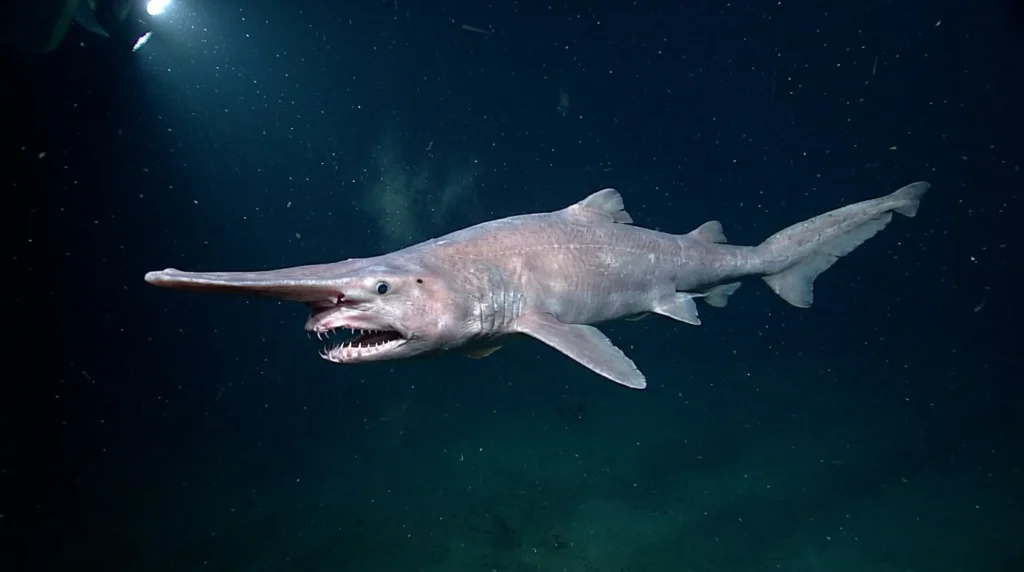
When you think of smart animals, you don’t normally think “Shark!” and the Goblin shark is a perfect representative of being one of the dumbest animals in the world.
Goblin Shark – The “Living Fossil” of the Deep Sea
Goblin Shark is one of the strangest and most ancient sharks still alive today. It lives deep in the ocean, far away from sunlight, which is why it looks so unusual and rarely gets seen by humans.
What Makes It So Unique?
The goblin shark has a very distinctive appearance:
A long, flat snout that looks like a blade Pinkish-gray, almost translucent skin A jaw that can shoot forward suddenly to catch prey Long, sharp, nail-like teeth
Its appearance is so strange that people often call it a “living fossil” because it hasn’t changed much in over 100 million years.
How It Hunts
The goblin shark is a stealth hunter of the deep sea.
It uses a special hunting method:
It slowly swims through dark water It senses prey using electroreceptors Its jaw suddenly juts forward like a trap It grabs fish or squid before they can escape
This jaw movement is one of the fastest among all sharks.
Where It Lives
Goblin sharks are found in deep ocean waters, usually:
At depths of 100–1,300 meters Near continental slopes and underwater canyons In oceans around Japan, the Atlantic, and parts of the Indian Ocean
Because they live so deep, they are rarely seen alive.
Size and Diet
Can grow up to about 3–4 meters (10–13 feet) Feeds on: Fish Squid Crustaceans
It is not a fast swimmer, so it relies on surprise attacks rather than chasing prey.
Strange But True Facts
Its snout acts like a “radar” to detect movement in the dark Its jaw can extend forward like a spring-loaded trap It has soft, flabby muscles because it doesn’t need speed Most specimens found are accidentally caught by deep-sea fishing nets
Why Scientists Love It
The goblin shark is important because it helps scientists understand:
Ancient shark evolution Deep-sea survival adaptations How marine life survives in extreme darkness and pressure
It is one of the closest living links to prehistoric sharks.
The goblin shark may look scary or “alien-like,” but it is simply a perfectly adapted deep-sea hunter. Hidden in the darkest parts of the ocean, it reminds us how little we still know about life beneath the waves.
3. Ostrich
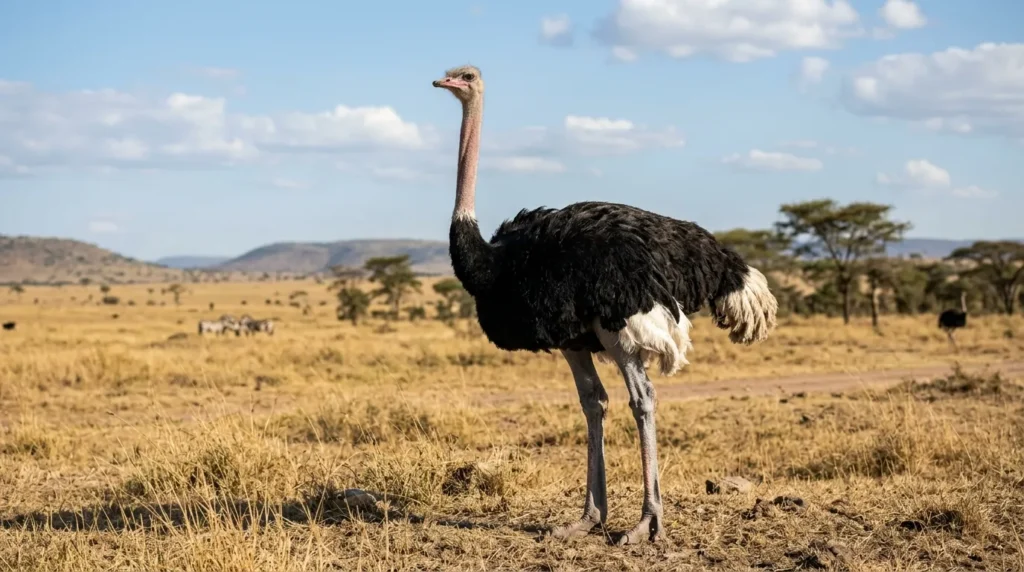
Those legs. That neck. The humongous eyes. Ostriches just look dumb. I know that’s harsh, but I call it like it is. But their actions will make you scratch your head, too.
Ostrich – The Largest and Fastest Bird on Land
Ostrich is the largest living bird in the world—and even though it cannot fly, it is one of the most powerful and fastest land birds on Earth.
What Is an Ostrich?
The ostrich is a flightless bird native to Africa. Instead of flying, it has evolved for speed, strength, and survival on open land like savannas and deserts.
It belongs to a group of birds called ratites, which also includes emus and kiwis.
Appearance
Ostriches are easy to recognize because of their unique features:
Very long neck and legs Large body covered in soft feathers Big eyes (among the largest of any land animal) Two-toed feet built for running
Males are usually black and white, while females are more brownish-gray for camouflage.
Speed and Strength
Ostriches are incredibly fast runners:
Can run up to 70 km/h (43 mph) Take long strides of up to 4–5 meters Can maintain high speed for long distances
Their powerful legs are also used for defense—an ostrich kick can seriously injure predators.
Habitat
Ostriches are found mainly in:
African savannas Grasslands Semi-desert regions
They prefer open areas where they can easily spot predators from far away.
What Do Ostriches Eat?
Ostriches are omnivores, meaning they eat both plants and small animals.
Their diet includes:
Grass and seeds Fruits and flowers Insects like locusts Small reptiles
They swallow small stones to help grind food in their stomach.
Behavior and Defense
Ostriches rely on awareness and speed to survive:
They have excellent eyesight They often live in groups for safety They use powerful kicks to defend themselves They can lie flat on the ground to blend in with surroundings
(And no—they do not actually bury their heads in the sand. That is a myth.)
Amazing Ostrich Facts
Eggs are the largest of any bird species One ostrich egg can weigh about 1.4 kg (3 lbs) Their eyes are bigger than their brain They can survive long periods without water They are surprisingly intelligent and alert animal.
The ostrich is a perfect example of how evolution creates specialists. While it cannot fly like most birds, it dominates the ground with speed, strength, and sharp survival instincts—making it one of the most impressive birds on Earth.
4. Koala
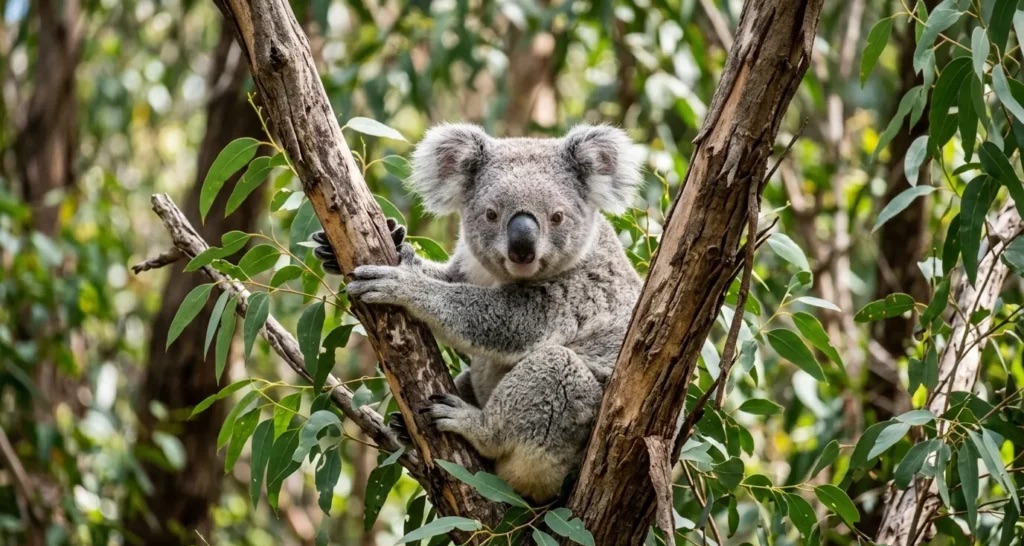
Aw, the cute, sweet, furry little koala… is dumb? Let’s look into this further. Koalasaren’t bears; they’re marsupials that are related to kangaroos. And so begins the dumbness. (But that would be on us, no?)
Koala – The Calm Tree-Loving Marsupial
Koala is one of the most recognizable animals in the world, often called the “koala bear” (even though it is not actually a bear). It is a small, tree-dwelling marsupial native to Australia.
What Is a Koala?
Koalas belong to a group of mammals called marsupials, meaning they carry and nurse their babies (called joeys) in a pouch.
They spend almost their entire lives in eucalyptus trees, eating, sleeping, and resting among the branches.
Appearance
Koalas have a very soft and cuddly look:
Round, fluffy ears Large, black nose Thick grey or brown fur Strong claws for climbing trees
Their body is built for gripping branches and staying in trees for long periods.
Diet – Very Special Eating Habits
Koalas eat almost nothing except eucalyptus leaves.
But eucalyptus leaves are:
Low in nutrients Toxic to most animals
Koalas survive because they have a special digestive system that detoxifies the leaves.
They eat slowly and sleep a lot to save energy.
Sleeping Life
Koalas are famous for sleeping:
Up to 18–22 hours a day Because their diet gives them very little energy
They are most active at night when they feed and move between trees.
Habitat
Koalas live mainly in:
Eastern and southeastern Australia Eucalyptus forests and woodlands
They rarely come down from trees unless they need to move to another one.
Baby Koalas (Joeys)
Koala babies are called joeys:
Born very tiny, about the size of a jellybean Crawl into their mother’s pouch immediately after birth Stay in the pouch for about 6–7 months Later ride on their mother’s back
Behavior and Personality
Koalas are:
Quiet and gentle Mostly solitary (they like being alone) Slow-moving Very territorial
They communicate using deep grunts, especially during mating season.
Interesting Facts
Koalas have fingerprints very similar to humans Their fingerprints are so close that they can confuse crime scene investigations They have strong hands adapted for climbing Their brains are unusually small compared to body size They are very sensitive to heat and often rest in cool tree forks
Conservation Status
Koalas face several threats:
Habitat loss from deforestation Bushfires in Australia Climate change Disease (like chlamydia in some populations)
Because of these, their populations are under pressure in some regions.
The koala may seem slow and sleepy, but it is perfectly adapted to its environment. Its unique diet, tree life, and calm lifestyle make it one of the most distinctive and beloved animals in the world.
5. Turkey
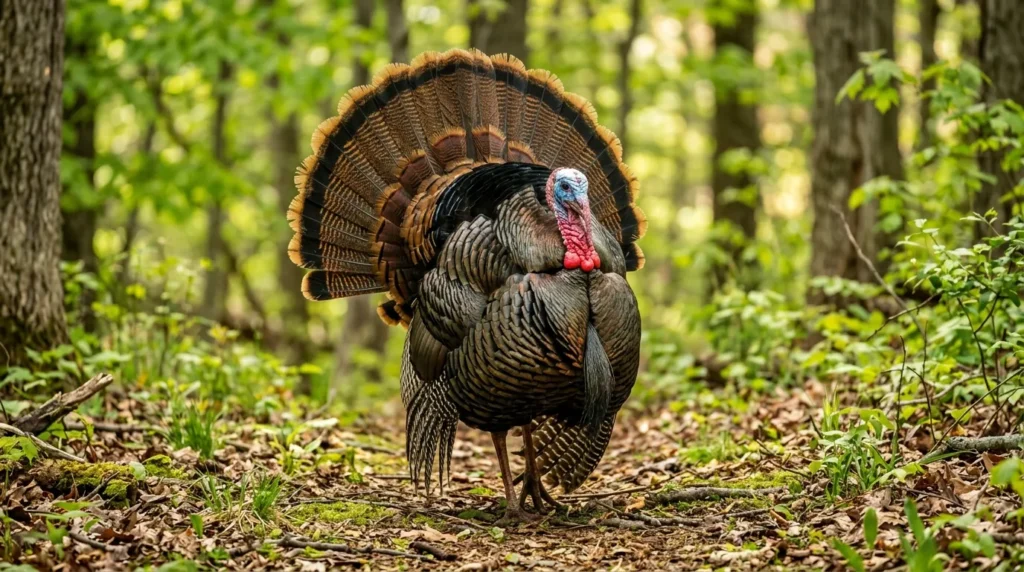
A turkey sat on a backyard fence as he sang his sad, sad tune…Thanksgiving Day is coming gobble gobble gobble gobble, and I know I’ll be eaten soon.Just a little tune they taught us in elementary school. A bit macabre, but whatever.
Turkey – The Wild Forest Bird
Wild Turkey is a large bird native to North America and one of the most well-known ground-dwelling birds in the world. It is also the ancestor of the domestic turkey commonly eaten in many countries.
What Is a Turkey?
Wild turkeys are strong, fast birds that spend most of their time on the ground but can fly short distances into trees to escape danger.
They are social animals and often move in groups called flocks.
Appearance
Turkeys have a very distinctive look:
Large, round body Dark feathers with a metallic sheen Fan-shaped tail (especially males) Bare red head and neck skin Long legs built for running
Male turkeys are called “toms,” and females are called “hens.”
Behavior
Turkeys are more intelligent and alert than many people think:
They have strong eyesight and hearing They can recognize predators quickly They communicate using gobbles, clucks, and purr-like sounds Males display their tail feathers to attract females
Habitat
Wild turkeys live in:
Forests Grasslands Wooded areas Farmlands
They prefer areas with trees for roosting at night.
Diet
Turkeys are omnivores, meaning they eat both plants and animals.
Their diet includes:
Seeds and grains Berries and fruits Insects like grasshoppers Small reptiles and worms
They spend much of the day foraging on the ground.
Movement and Survival
Turkeys can run up to about 40 km/h (25 mph) They can fly short distances at high speed to escape danger At night, they sleep in trees to stay safe from predators
Interesting Facts
Benjamin Franklin once admired the turkey as a potential national symbol of the United States Turkeys can change the color of their heads based on mood They have excellent memory for routes and danger zones Wild turkeys are very different from farm-raised ones
The wild turkey is often underestimated, but it is actually a smart, alert, and adaptable bird. In the wild, it plays an important role in forest ecosystems and shows how survival often depends on awareness rather than appearance.
 ☄️WELCOME TO FACENOTEE.COM🕳️👍🏿
Leave a comment