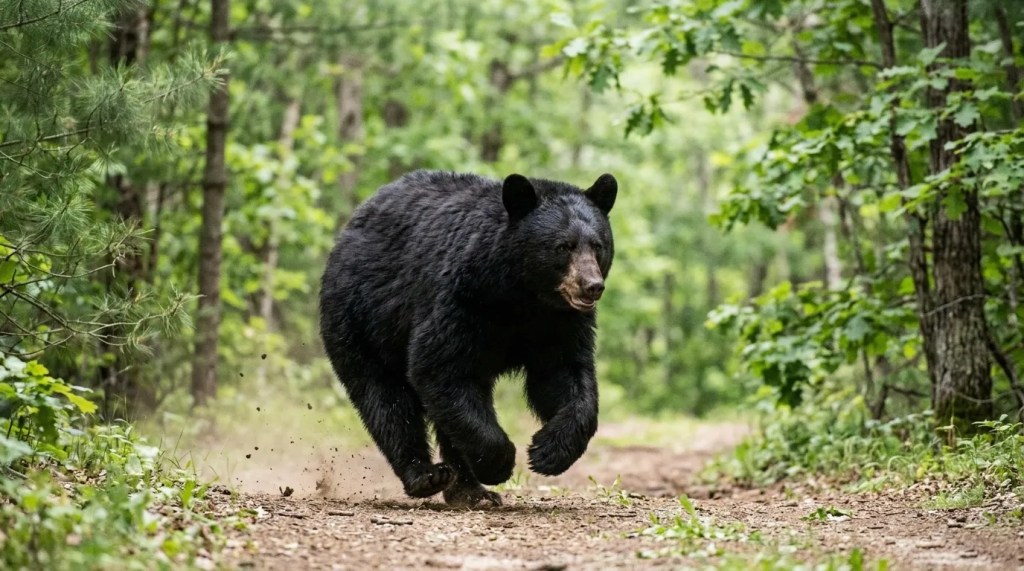
The American black bear is one of North America’s most adaptable large mammals, known for its intelligence, climbing ability, and surprising calmness compared to other bear species. Despite its name, it isn’t always black, and its evolutionary history explains why it thrives in such a wide range of environments today.
Evolution: how black bears became so adaptable
American black bears evolved from early bear ancestors in Eurasia millions of years ago. Over time, populations migrated into North America and adapted to changing climates and landscapes.
Key evolutionary traits that helped them survive:
Omnivorous diet flexibility: They can eat almost anything—plants, insects, fish, and small animals Climbing ability: Developed strong limbs and claws for escaping predators and reaching food Hibernation behavior: Ability to slow metabolism during winter to survive food shortages High adaptability: They thrive in forests, swamps, mountains, and even near human settlements
This flexibility is one reason they are still widespread today while other large mammals declined.
Physical traits
American black bears vary in appearance:
Color ranges from black to brown, cinnamon, or even blonde Males can weigh 90–270 kg, sometimes more in food-rich areas Females are significantly smaller They have short, non-retractable claws designed for climbing and digging
Despite their size, they are surprisingly agile and fast, capable of short bursts of speed up to 40–50 km/h.
Behavior in the wild
Black bears are generally solitary and highly intelligent.
Feeding behavior
They are opportunistic feeders:
Spring: grasses, shoots, insects Summer: berries, fruits Autumn: nuts and high-calorie foods to build fat for winter
They spend much of their time foraging, using strong memory to revisit food-rich areas.
Intelligence
Black bears are among the most cognitively advanced carnivores:
Strong memory for food locations Problem-solving skills (e.g., opening containers or doors in human areas) Ability to learn from experience and avoid danger
Hibernation
In colder regions, they enter a winter dormancy:
Not true deep hibernation like some animals, but a long sleep-like state Heart rate and metabolism drop significantly They can survive months without eating, drinking, or defecating Cubs are often born during this period
Social behavior
Black bears are mostly solitary, but they are not strictly antisocial:
Mothers are very protective of cubs Males may tolerate each other around rich food sources Communication includes body language, vocal sounds, and scent marking
Conflicts are usually avoided rather than fought.
Human interaction
Unlike more aggressive bear species, black bears usually avoid humans. However, they may enter populated areas searching for food.
Important behaviors:
Strong attraction to garbage and human food smells Generally avoid confrontation unless threatened Rarely attack unless surprised, cornered, or protecting cubs
This adaptability has helped them survive but also brings them into closer contact with humans.
Ecological role
Black bears play a key role in forest ecosystems:
Seed dispersal through fruit consumption Controlling insect populations Scavenging dead animals, helping nutrient recycling
They act as both predator and plant disperser, making them ecologically important.
Quick facts
Found across North America Extremely adaptable omnivores Excellent climbers Smart and curious animals Usually avoid humans unless food is involved
The American black bear is a survival success story. Its evolution shaped it into a flexible, intelligent animal capable of living in many environments without needing extreme specialization. That adaptability is why it remains one of the most widespread bears in the world today.
 ☄️WELCOME TO FACENOTEE.COM🕳️👍🏿
Leave a comment