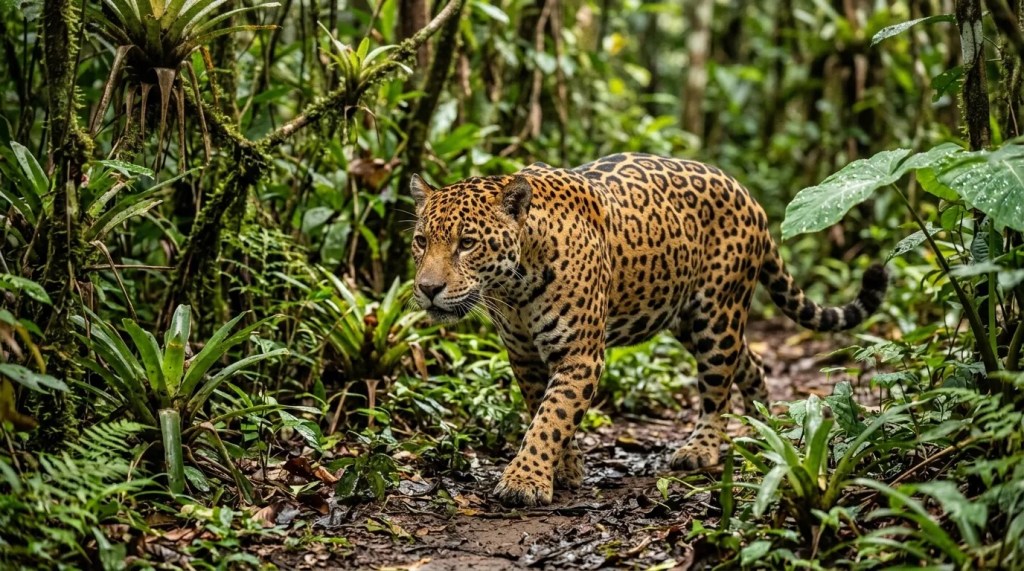
The Jaguar is one of the most powerful and mysterious big cats in the world. Native to the Americas, it is known for its incredible strength, stealth hunting style, and ability to thrive in dense forests and wetlands. Despite being less talked about than lions or tigers, jaguars are apex predators with one of the strongest bites in the entire cat family.
What is a jaguar?
The jaguar is the largest wild cat in the Americas and the third-largest big cat globally after tigers and lions. It belongs to the Panthera genus, which also includes lions, tigers, and leopards.
Muscular, stocky build Golden-yellow coat with black rosettes (spots) Solitary and highly territorial Excellent swimmer and climber
Unlike many cats, jaguars are strongly associated with water.
Habitat and distribution
Jaguars once ranged widely across North and South America, but their territory has shrunk.
Today they are mainly found in:
The Amazon rainforest Central American forests Parts of Mexico Small protected areas in the southern United States (rare sightings)
They prefer dense forest, riverbanks, and swampy environments where they can ambush prey.
Lifestyle and behavior
Jaguars are solitary animals, meaning they live and hunt alone.
Nocturnal hunters
Most active at night or during dawn/dusk Use stealth instead of speed Rely on surprise attacks from close range
Intelligent predators
They are highly strategic hunters:
Stalk silently through vegetation Wait patiently before attacking Often drag prey to safe locations like trees or water
Exceptional swimmers
Unlike many big cats, jaguars:
Swim very well Hunt fish, turtles, and caimans Cross rivers with ease
Diet and hunting style
Jaguars are apex predators, meaning they are at the top of the food chain.
Their diet includes:
Deer Capybaras Wild boars Birds and reptiles Fish and turtles
Unique killing method
Jaguars are famous for their powerful bite:
They bite directly through the skull or shell of prey Their bite force is among the strongest of all big cats This is different from lions or tigers, which usually suffocate prey
Temperament
Jaguars are:
Solitary and secretive Generally non-aggressive toward humans unless provoked Highly confident predators in their territory More likely to avoid confrontation than seek it
However, when threatened, they can be extremely dangerous due to their strength.
Conservation status
Jaguars are currently classified as Near Threatened, but their population is declining in many regions.
Major threats:
Deforestation (especially in the Amazon) Habitat fragmentation Illegal hunting and retaliation killings Loss of prey species
Conservation efforts include:
Protected reserves in Brazil, Peru, and Mexico Wildlife corridors connecting habitats Anti-poaching laws
Ecological importance
Jaguars are a keystone species, meaning they play a crucial role in maintaining ecosystem balance.
They help:
Control herbivore populations Maintain healthy vegetation growth Support biodiversity in rainforest ecosystems
Without jaguars, ecosystems can become unbalanced.
Largest big cat in the Americas Excellent swimmer and climber Strongest bite among big cats Solitary and territorial Plays a vital role in rainforest health
The jaguar is a symbol of power, mystery, and survival. Its ability to adapt to forests, rivers, and even wetlands makes it one of the most versatile predators on Earth. Protecting jaguars also means protecting the rich ecosystems they depend on.
 ☄️WELCOME TO FACENOTEE.COM🕳️👍🏿
Leave a comment