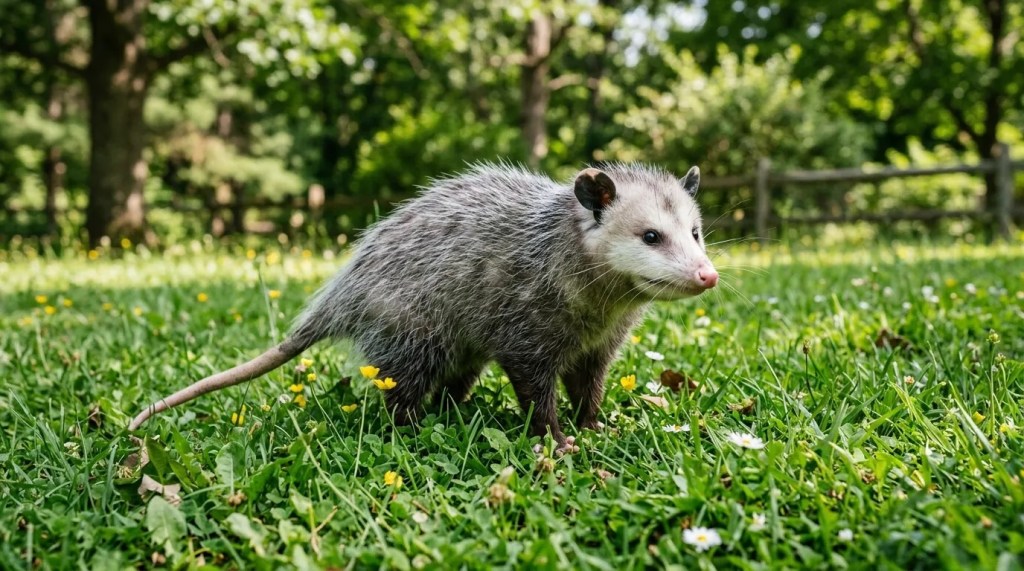
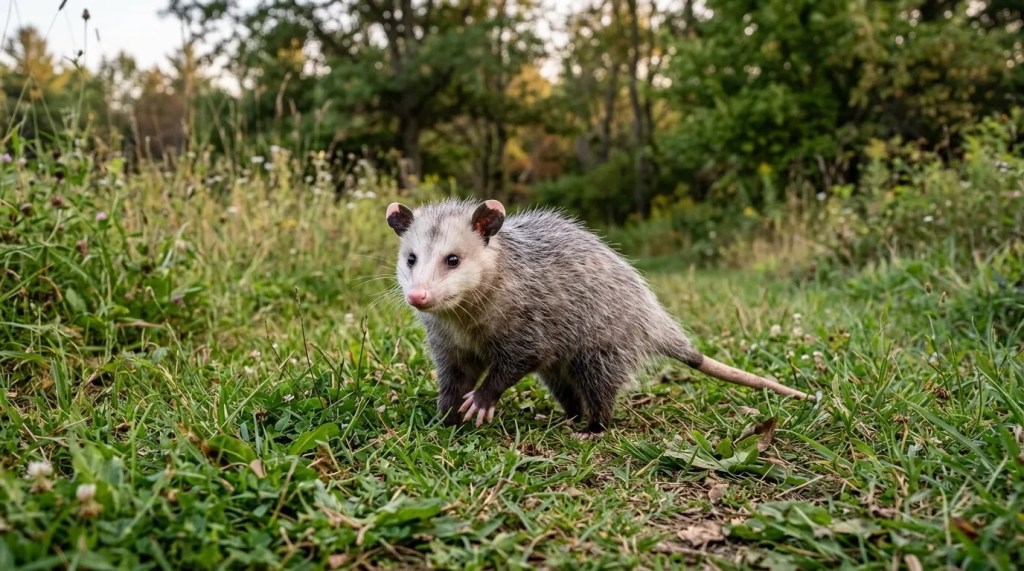
The Opossum is one of the most misunderstood mammals in the Americas. Often seen wandering at night or “playing dead” when threatened, this unusual animal has a surprisingly complex biology, clever survival strategies, and an important role in ecosystems.
Let’s break down everything you need to know about it.
What is an opossum?
Opossums are marsupials, meaning they carry and nurse their young in a pouch—similar to kangaroos. They are native mainly to North and South America, with the most well-known species being the Virginia opossum.
They are:
Nocturnal (active at night) Omnivorous (eat both plants and animals) Highly adaptable to urban and wild environments
Despite their rat-like appearance, they are not rodents at all.
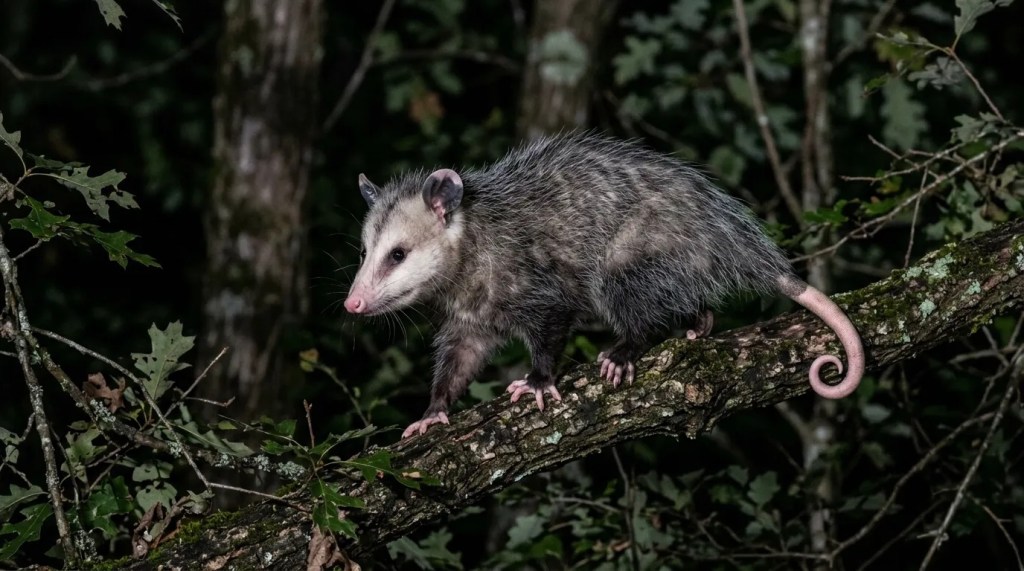
Night lifestyle
Opossums are primarily active at night. During this time they:
Search for food Explore territories Avoid predators
They have excellent night vision and a strong sense of smell, which helps them locate food in the dark.
Diet: nature’s clean-up crew
Opossums are opportunistic feeders, meaning they eat almost anything available:
Fruits and berries Insects and worms Small animals and eggs Carrion (dead animals) Human food scraps in urban areas
Because of this, they are often called “nature’s scavengers”, helping to clean up the environment.
Survival superpower: “playing dead”
One of the most famous behaviors of the opossum is thanatosis, commonly called “playing dead.”
When threatened:
It collapses and becomes motionless Its breathing slows dramatically It may even release a foul smell to mimic decay
This is not voluntary acting—it is an automatic stress response. Predators often lose interest, thinking the animal is already dead.
Disease resistance myth
There is a common myth that opossums are “dirty” or dangerous carriers of disease. In reality:
Their body temperature is lower than many mammals This makes it harder for some parasites (like rabies virus) to survive They actually groom themselves frequently and are quite clean animals
However, like any wild animal, they should not be handled.
Physical traits
Opossums have several distinctive features:
Grayish-white fur Long, hairless prehensile tail (used for balance, not hanging for long periods) Pointed snout Sharp teeth (50+ in total, more than most mammals in North America) Opposable thumbs on hind feet for climbing
They are excellent climbers and can use trees, fences, and roofs with ease.
Habitat and adaptability
Opossums are extremely adaptable and can live in:
Forests Grasslands Swamps Urban areas and cities
In cities, they often live near:
Garbage bins Basements Abandoned structures
This adaptability has helped them survive despite habitat loss.
Reproduction
Opossums are marsupials, so their reproduction is unique:
Babies are born extremely tiny (about the size of a bee) They crawl into the mother’s pouch immediately after birth They stay in the pouch for several weeks Later, they ride on the mother’s back until independent
A single female can have multiple offspring per year.
Threats and challenges
While not endangered overall, opossums face risks such as:
Road accidents (very common) Predation by dogs, coyotes, and large birds Habitat destruction
In many areas, they are actually thriving due to human expansion.
Ecological importance
Opossums play a valuable role in ecosystems:
Control insect populations (including ticks) Clean up carrion and waste Help reduce spread of some pests
They are often considered beneficial wildlife in both rural and urban environments.
Only marsupial native to North America Has over 50 teeth (more than any other North American mammal) Famous for “playing dead” Excellent climber with a prehensile tail Helps control pests like ticks and insects
The opossum is a quiet survivor—misunderstood, but incredibly resilient. Its ability to adapt, avoid danger, and thrive near humans makes it one of the most successful small mammals in the Americas.
 ☄️WELCOME TO FACENOTEE.COM🕳️👍🏿
Leave a comment