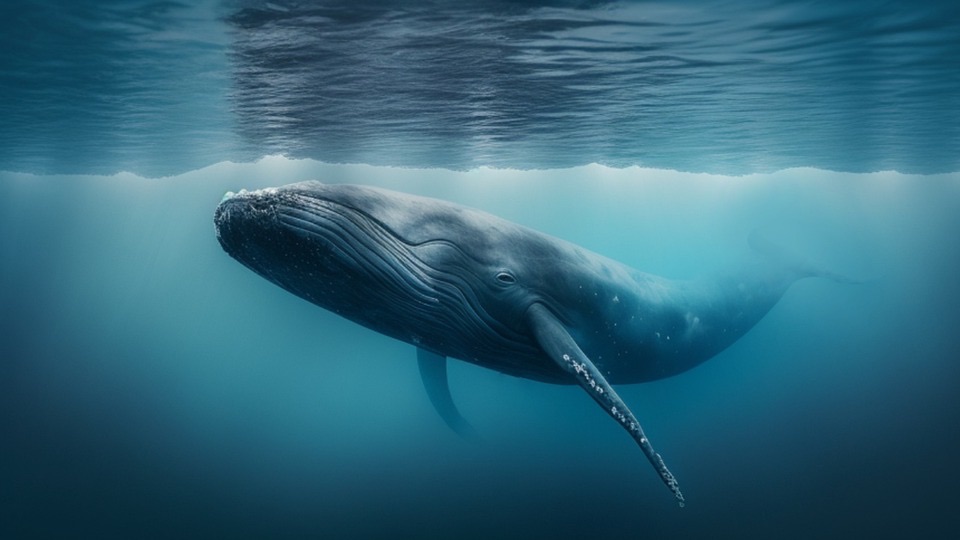
The Blue Whale — Blue Whale — is the largest animal ever known to have existed on Earth, even larger than any dinosaur. These gentle giants live in the oceans and are a symbol of the incredible scale and mystery of marine life.
What is a Blue Whale?
The Blue Whale is a marine mammal belonging to the group of baleen whales. Instead of teeth, it has baleen plates that act like a filter, allowing it to feed on tiny organisms.
Despite its enormous size, it feeds mainly on microscopic shrimp-like animals called krill.
Size and Weight
Blue whales are truly massive:
Length: Up to 24–30 meters (80–100 feet) Weight: Up to 180–200 tons Heart size: As big as a small car Tongue weight: Can weigh as much as an elephant Blood vessels: So large that a human could crawl through some of them
To put it simply, a Blue Whale is longer than a Boeing 737 airplane.
Diet and Feeding
Even though they are the largest animals on Earth, Blue whales survive on one of the smallest creatures in the ocean — krill.
They can eat up to 4 tons of krill per day They use a feeding method called lunge feeding, taking in huge amounts of water and filtering out food Their baleen plates act like a giant sieve
Habitat and Distribution
Blue whales are found in oceans all around the world, including:
Pacific Ocean Atlantic Ocean Indian Ocean Southern Ocean near Antarctica
They migrate long distances between feeding and breeding grounds.
Communication
Blue whales are also known for being the loudest animals on Earth.
Their calls can reach up to 188 decibels Sounds can travel hundreds or even thousands of kilometers underwater They use sound to communicate, find mates, and navigate the deep ocean
Reproduction and Life Cycle
Pregnancy lasts about 11–12 months Calves are born weighing about 2.5–3 tons A baby blue whale drinks up to 400 liters of milk per day They stay with their mother for about 6–8 months
Blue whales can live for 70–90 years, sometimes even longer.
Threats and Conservation
Blue whales were heavily hunted in the past, especially during commercial whaling in the 19th and 20th centuries. This pushed them close to extinction.
Today, they are protected, but they still face threats such as:
Ship strikes Ocean noise pollution Climate change affecting krill populations
They are currently classified as Endangered, meaning they are still at risk.
Why Blue Whales Matter
Blue whales play an important role in ocean ecosystems:
They help cycle nutrients through the ocean Their movements support marine food chains They are an indicator of ocean health
Protecting them also means protecting the oceans themselves.
Quick Facts
Largest animal ever known Eats tiny krill only Heart weighs as much as a car Can live nearly a century Communicates across ocean basins
 ☄️WELCOME TO FACENOTEE.COM🕳️👍🏿
Leave a comment