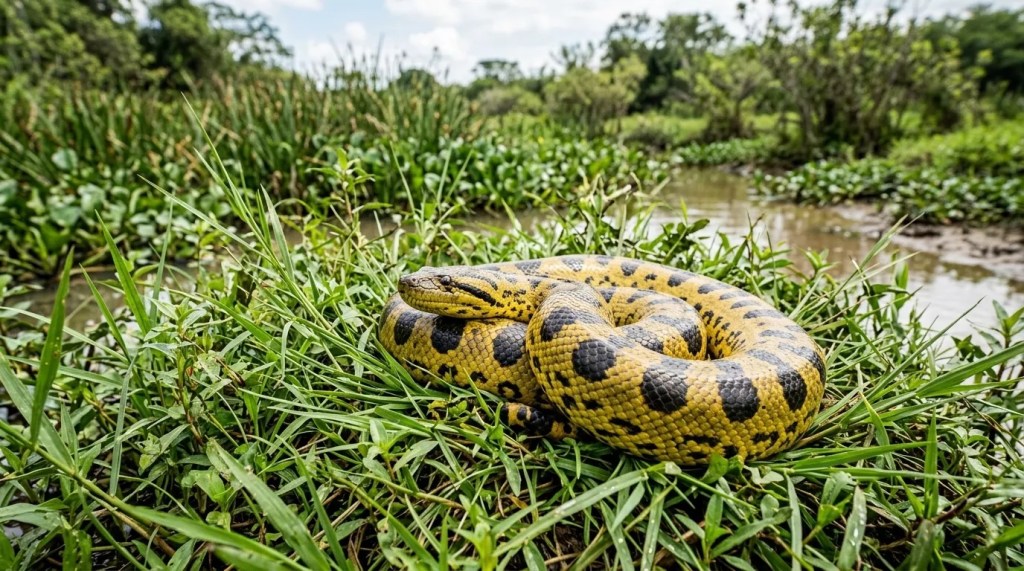
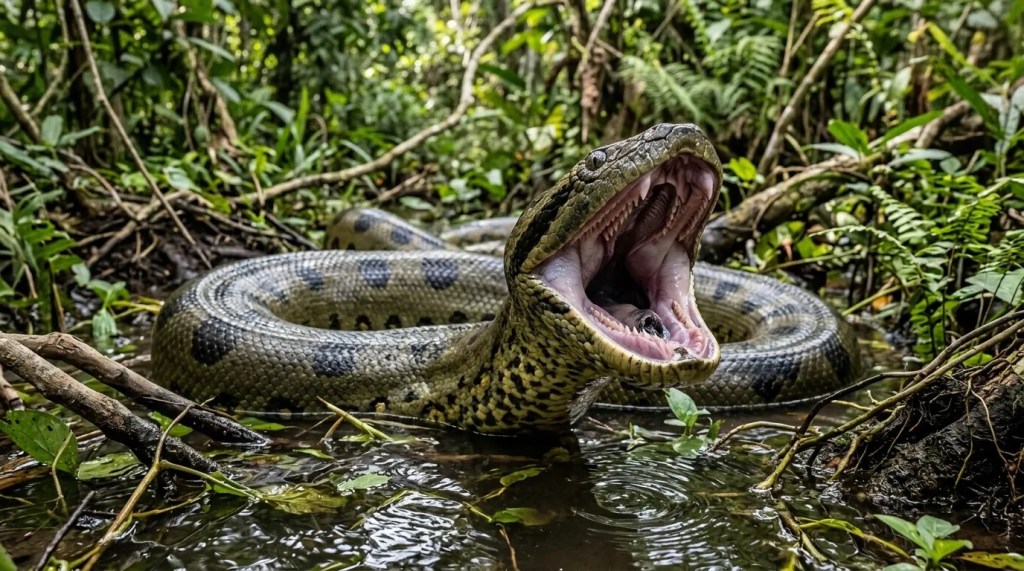
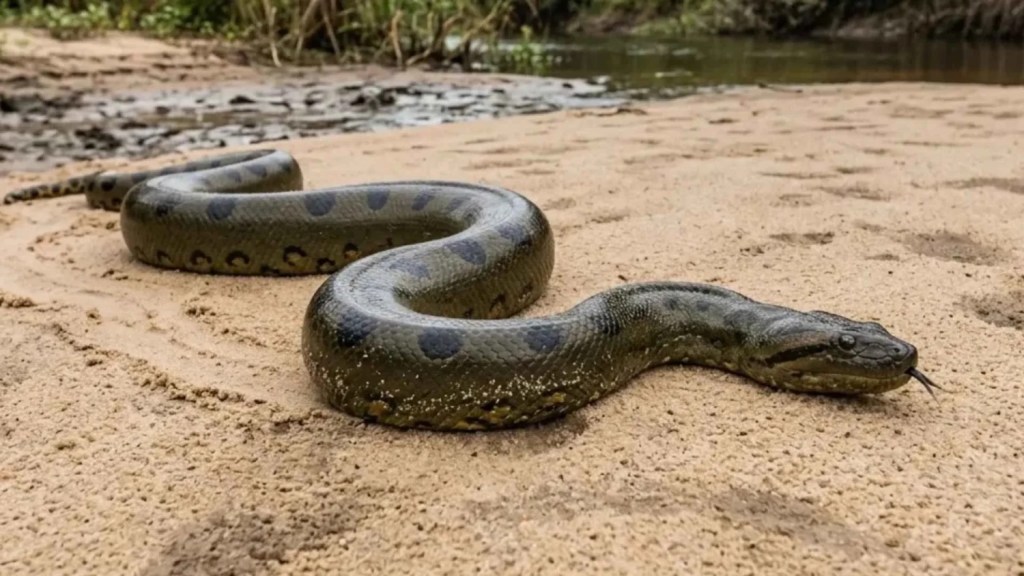
The Anaconda is one of the most famous and misunderstood snakes in the world. Known for its massive size and powerful constricting ability, it has become a symbol of both fascination and fear in South American wildlife.
But beyond the myths, anacondas are highly specialized, non-venomous reptiles that play an important role in their ecosystems.
What is an anaconda?
Anacondas are large, non-venomous constrictor snakes found mainly in South America. The most well-known species is the green anaconda, which is one of the heaviest snakes on Earth.
Non-venomous (they kill by constriction) Semi-aquatic (live in water and land) Extremely muscular body Excellent swimmers
They belong to the boa family.
Habitat and distribution
Anacondas are native to tropical regions of South America, especially:
Amazon rainforest Orinoco River basin Swamps, marshes, and slow-moving rivers
They prefer warm, wet environments where they can stay hidden in water and vegetation.
Types of anacondas
There are four recognized species:
Green anaconda (largest and most famous) Yellow anaconda Dark-spotted anaconda Bolivian anaconda
The green anaconda is the one most people refer to when talking about giant snakes.
Size and strength
Anacondas are among the largest snakes in the world.
Can grow over 5–7 meters (16–23 feet) on average Some reports claim larger individuals, but these are rare and often unverified Weigh over 100 kg or more in large adults
They are not the longest snakes (that title often goes to reticulated pythons), but they are among the heaviest.
Hunting and diet
Anacondas are ambush predators, meaning they wait for prey and strike quickly.
They eat a wide variety of animals:
Fish Birds Turtles Capybaras Wild pigs Occasionally caimans
How they kill
They wrap their muscular body around prey Tighten until the prey can no longer breathe Swallow it whole using highly flexible jaws
They are powerful, but not aggressive toward humans unless provoked.
Semi-aquatic lifestyle
Anacondas are strongly tied to water:
They can stay submerged for long periods Their eyes and nostrils are positioned on top of the head for stealth They are excellent swimmers and move more easily in water than on land
Water also helps support their heavy bodies.
Behavior and temperament
Despite their fearsome reputation:
Anacondas are generally shy Prefer to avoid humans Spend most of their time hiding or resting in water Only become defensive when threatened
They are solitary animals except during mating season.
Reproduction
Anacondas have a unique reproductive behavior:
Females are larger than males Mating can involve “breeding balls” where multiple males surround a female They give birth to live young (not eggs) A litter can contain 20–40 baby snakes
The young are independent immediately after birth.
Myths vs reality
Myth: Anacondas eat humans regularly
Reality: Human attacks are extremely rare and not typical behavior.
Myth: They crush prey instantly like in movies
Reality: Constriction takes time and is controlled, not explosive.
Myth: They are always aggressive
Reality: They are shy and avoid confrontation.
Ecological importance
Anacondas play a key role in their ecosystem:
Control populations of rodents and other animals Help maintain balance in wetland food chains Are indicators of healthy aquatic environments
One of the heaviest snakes in the world Non-venomous constrictor Excellent swimmers Native to South America Solitary and secretive
The anaconda is not the monster often shown in movies—it is a powerful, intelligent predator adapted perfectly to life in water-rich environments. While impressive in size and strength, it is also a crucial part of South America’s natural ecosystem.
 ☄️WELCOME TO FACENOTEE.COM🕳️👍🏿
Leave a comment