
Brunei, officially known as Brunei Darussalam, has a long and fascinating history shaped by trade, Islam, colonial influence, and monarchy. Here’s a clear overview from ancient times to today:
Early History (Before 14th Century)
The area that is now Brunei was part of early Southeast Asian trading networks. It was influenced by powerful regional empires like Srivijaya (7th–13th century) and later Majapahit (13th–15th century). Early settlements were located along rivers, especially the Brunei River, which became a key trading hub.
Rise of the Bruneian Empire (14th–16th Century)
Brunei became a powerful Islamic sultanate in the 14th century. The first Muslim ruler is believed to be Sultan Muhammad Shah (reigned c. 1363–1402). Under Sultan Bolkiah (1485–1524), Brunei reached its golden age: Controlled parts of Borneo, the Philippines (including Manila), and nearby islands. Became a major center for trade in spices, camphor, and other goods. Islam spread widely during this period and became central to Brunei’s identity.
Decline of the Empire (16th–19th Century)
After its peak, Brunei began to weaken due to: Internal conflicts and succession disputes European colonial expansion (especially Spanish and later British) In 1578, the Spanish attacked Brunei, temporarily capturing its capital. Over time, Brunei lost much of its territory.
British Influence and Protectorate (19th–20th Century)
In the 1800s, Brunei’s territory shrank significantly: Parts of its land were ceded to James Brooke (the “White Rajah” of Sarawak). In 1888, Brunei became a British protectorate: Britain controlled foreign affairs and defense. The Sultan retained internal authority. The discovery of oil in 1929 transformed Brunei’s economy.

World War II (1941–1945)
Brunei was occupied by Japanese forces during WWII. The country suffered damage and economic disruption. It was liberated by Allied forces in 1945.
Path to Independence (1959–1984)
A constitution was introduced in 1959, granting self-governance while Britain still handled defense and foreign policy. A brief revolt occurred in 1962, which was suppressed with British support. Brunei chose not to join Malaysia in 1963. On January 1, 1984, Brunei gained full independence.
Modern Brunei (1984–Present)
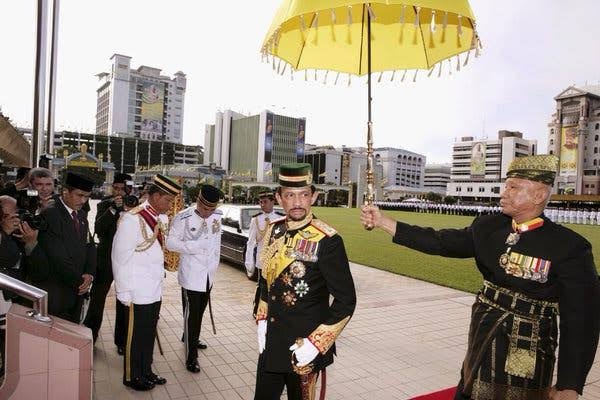
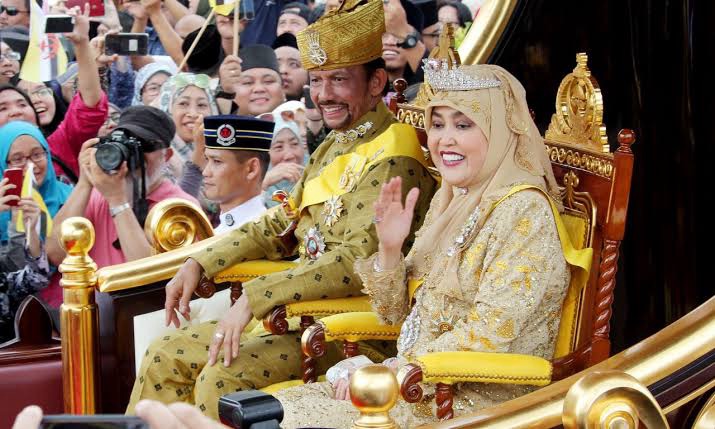
Brunei is a wealthy, oil-rich nation with one of the highest standards of living in Southeast Asia. It is ruled by Sultan Hassanal Bolkiah, one of the world’s longest-reigning monarchs. The country is an absolute monarchy. In recent years, Brunei has: Implemented Sharia law (since 2014) alongside civil law. Focused on maintaining stability, welfare, and Islamic values.
Key Themes in Brunei’s History
Strong monarchical tradition Early Islamization Strategic role in regional trade Significant impact of colonialism Modern wealth driven by oil and gas.
Here’s the story of Brunei in a simple, narrative style so it feels like a flowing history rather than a timeline:
The Story of Brunei
A long time ago, on the northern coast of the island of Borneo, there was a small but strategic settlement along a river. This place would one day become Brunei. Because it sat along important sea routes, traders from China, India, and the wider Malay world stopped there to exchange goods like spices, silk, and camphor.
The Rise of a Kingdom
Around the 14th century, something important happened—Brunei embraced Islam. A local ruler became Muslim and established the Brunei Sultanate. This marked the beginning of Brunei as a powerful Islamic kingdom.
Under strong rulers like Sultan Bolkiah, Brunei grew into a regional empire. At its peak, it was so powerful that its influence reached parts of Borneo, the southern Philippines, and nearby islands. It became known as a rich trading center where merchants came from across Asia.
A Slow Decline
But over time, the empire began to shrink. Rival kingdoms grew stronger, internal disputes weakened leadership, and European powers arrived in Southeast Asia.
The Spanish attacked Brunei in the 1500s, and later the British gained influence in the region. Step by step, Brunei lost much of its territory, until it became much smaller than its former empire.
Under British Protection
By the late 1800s, Brunei had become a British protectorate. This meant the Sultan still ruled locally, but Britain controlled foreign affairs and defense.
During this time, something life-changing was discovered beneath Brunei’s land—oil and natural gas. This discovery would later turn Brunei into one of the richest countries in the world per person.
War and Survival
During World War II, Brunei was occupied by Japanese forces. Life became difficult, and the country suffered damage. After the war, British control returned, but Brunei slowly moved toward self-rule.
The Road to Independence
In 1959, Brunei gained internal self-government. There were political tensions, including a short rebellion in 1962, which was quickly controlled.
Unlike some neighbors, Brunei chose not to join Malaysia when it was formed in 1963. Instead, it continued under British protection until it was fully ready.
Finally, on January 1, 1984, Brunei became completely independent.
Modern Brunei
Today, Brunei is a small but wealthy nation ruled by Sultan Hassanal Bolkiah, one of the longest-reigning monarchs in the world.
Thanks to oil and gas, the country enjoys high living standards, free education and healthcare, and strong government support for its citizens. It is a peaceful nation that values tradition, Islam, and monarchy.
In Short
Brunei’s story is one of:
A small river settlement that became a powerful empire
A kingdom that slowly lost land to colonial powers
A nation transformed by oil wealth
A country that chose stability and tradition over expansion
If you want, I can also tell you:
Brunei’s story in 1-minute summary
Life inside Brunei today under the Sultan
Or how Brunei compares with Malaysia and Singapore
 ☄️WELCOME TO FACENOTEE.COM🕳️👍🏿
Leave a comment