


The history of Bhutan is a fascinating story of isolation, spirituality, and careful modernization. Nestled in the Himalayas, Bhutan developed a unique identity shaped by Buddhism and strong traditions.
Early History (before 1600s)
Early Bhutan was inhabited by small tribal communities. Buddhism arrived in the 7th century, especially through the teachings of Guru Padmasambhava (also called Guru Rinpoche). Over time, monasteries became centers of power, and different valleys were ruled by local leaders.
Unification of Bhutan (1600s)
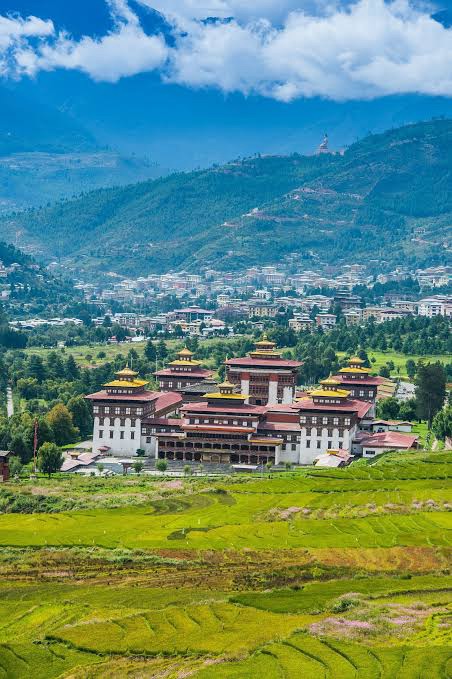
In the 17th century, a Tibetan lama named Zhabdrung Ngawang Namgyal unified Bhutan. He established a dual system of government: one for religion and one for administration. Massive fortress-monasteries called dzongs were built across the country. Bhutan successfully resisted invasions from Tibet.
Internal Conflict & British Contact (1700s–1800s)
After the death of Zhabdrung, Bhutan experienced internal power struggles. In the 19th century, Bhutan fought the British in the Duar War. Bhutan lost some territory and signed the Treaty of Sinchula with British India.
Rise of the Monarchy (1907)
In 1907, Bhutan became a hereditary monarchy. Ugyen Wangchuck was crowned the first king. The Wangchuck dynasty has ruled Bhutan ever since. Bhutan maintained close ties with British India and later independent India.
Modernization & Isolation Ends (1900s–2000s)
For much of its history, Bhutan remained isolated from the outside world. In the 20th century, the kings began modernizing the country: Roads, schools, and healthcare were introduced. Bhutan joined the United Nations in 1971. The country is famous for promoting Gross National Happiness instead of just economic growth.
Democracy & Present Day (2008–Present)
In 2008, Bhutan peacefully transitioned into a constitutional monarchy. The king voluntarily reduced his power and introduced democracy. Today, Bhutan balances: Tradition and modernization Environmental protection Cultural preservation

Summary
Bhutan’s history is unique because:
It was unified under strong religious leadership It avoided colonization It transitioned to democracy peacefully It values happiness and culture over rapid industrialization


Here’s the story of Bhutan, told in a simple and engaging way:
A Hidden Kingdom in the Mountains
High in the Himalayas, surrounded by towering peaks and deep valleys, lay a quiet and mysterious land—Bhutan.
For centuries, this land was cut off from the outside world. Small villages dotted the mountains, and life moved slowly, guided by nature and tradition.
The Spiritual Beginning
Long ago, a great Buddhist teacher, Guru Padmasambhava, traveled through the region.
Legend says he flew into Bhutan on the back of a tiger and meditated in caves high in the mountains. His teachings spread Buddhism across the land, shaping Bhutan’s identity forever.
Monasteries were built, and religion became the heart of daily life.
The Man Who United the Land
In the 1600s, Bhutan was divided, with different leaders controlling different valleys.
Then came Zhabdrung Ngawang Namgyal.
He was a strong and wise leader who united the people and built massive fortress-monasteries called dzongs. He created a system where religion and government worked side by side.
For the first time, Bhutan became one nation.
Challenges from Within and Outside
After his death, Bhutan faced internal conflicts as leaders struggled for power.
At the same time, the British Empire expanded into nearby India. Bhutan fought back during the Duar War but lost some land.
Even so, Bhutan remained independent—a rare thing in that era.
A New Royal Era
In 1907, the people chose a new path.
A respected leader, Ugyen Wangchuck, was crowned the first king. This began a royal dynasty that would guide Bhutan into the future.
The kings focused on unity, stability, and careful progress.
Opening to the World
For a long time, Bhutan stayed isolated. There were no televisions, very few roads, and little outside influence.
But in the 20th century, things began to change:
Schools and hospitals were built
Roads connected remote villages
Bhutan slowly opened its doors to the world
Yet, it refused to lose its identity.
A Different Kind of Success
While most countries chased wealth, Bhutan chose a different path.
It introduced the idea of Gross National Happiness—measuring success by the happiness and well-being of its people, not just money.
A Peaceful Transformation
In 2008, something remarkable happened.
The king gave power to the people, turning Bhutan into a democracy—not through war or protest, but by choice.
It was a rare and peaceful transformation.
The Heart of Bhutan’s Story
Bhutan’s story is not about conquest or riches.
It is about:
Peace over power
Culture over chaos
Happiness over wealth
And a nation that chose its own path.
Leave a Reply