|
Getting your Trinity Audio player ready…
|
A controversy surrounding Mark Zuckerberg’s superyacht in Alaska has taken a new turn after a representative for the Meta chief executive disputed claims that the vessel deliberately ignored a stranded boat seeking assistance.
The incident occurred in Southeast Alaska after a small 21-foot skiff reportedly ran out of fuel while traveling between Petersburg and Juneau. A nearby cruise ship, Wilderness Legacy, eventually went to the skiff’s aid and helped bring the stranded boat and its occupants to safety.
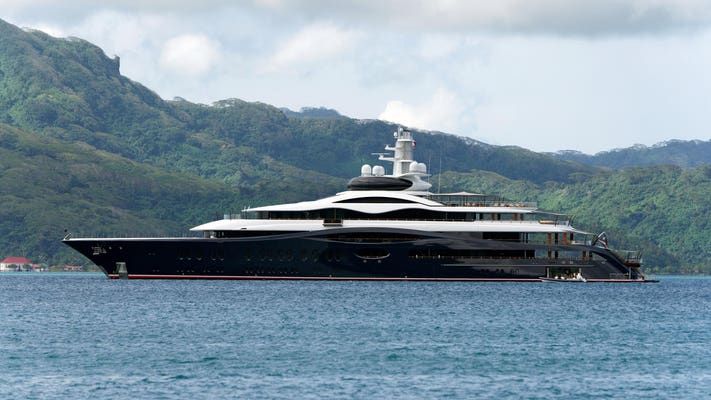
Attention quickly turned to Zuckerberg’s 387-foot superyacht, Launchpad, after passengers aboard the cruise ship learned that the much larger vessel had been closer to the stranded skiff. Reports circulated online suggesting that the yacht had repeatedly refused to answer requests for help.

However, a representative for Zuckerberg has rejected that characterization, saying the yacht’s crew was operating on a different radio channel and did not hear the initial assistance request in time.
What happened in Southeast Alaska?
The incident reportedly unfolded near Farragut Bay earlier in the week. The small skiff had run out of fuel, leaving those aboard unable to continue their journey.
According to reporting from The Verge, the U.S. Coast Guard received a call concerning the vessel and later determined that the boat was not in distress. Instead, the Coast Guard issued a marine assistance request to vessels in the area.
That distinction is important because reports initially described the situation as though the stranded boat had issued a formal distress call.
Coast Guard Public Affairs Specialist Shannon Shepard said the Coast Guard heard the call for assistance shortly after 9:30 p.m. and determined at approximately 9:56 p.m. that the boat was not in distress. A general marine assistance request was then broadcast.
The situation was ultimately resolved when Wilderness Legacy, a small cruise ship operated by UnCruise Adventures, changed course and went to help.
Why did Zuckerberg’s yacht become part of the story?
The controversy began because tracking information indicated that Launchpad was closer to the stranded skiff than Wilderness Legacy.
A passenger aboard the cruise ship, Michael Love, described the events on social media. According to his account, the cruise ship’s captain told passengers that Zuckerberg’s yacht was closer but had not responded to radio calls for assistance.
Love said passengers reacted negatively when they heard the announcement.
The account quickly spread online, generating criticism directed at Zuckerberg and the crew of Launchpad. Some reactions focused on the enormous size and reported value of the yacht, while others questioned why a vessel so close to the stranded boat did not immediately respond.
The story became particularly controversial because Wilderness Legacy eventually went out of its way to assist, despite being farther from the stranded skiff.
Tracking information reviewed by The Verge appeared to show Launchpad stopping near the entrance to the bay while Wilderness Legacy passed the yacht, turned around and assisted the stranded boat.
Zuckerberg was not aboard the yacht
One of the most important details in the controversy is that Zuckerberg himself was not aboard Launchpad when the incident happened.
Brian Baker, a spokesperson for Zuckerberg and his wife, Priscilla Chan, said the couple were not on the yacht at the time.
That means the decision-making during the incident would have rested with the yacht’s professional crew rather than Zuckerberg personally.
Baker also provided an explanation for why the yacht did not respond to the initial assistance request.
According to the representative, the crew was operating on a different radio channel. By the time they reviewed the Coast Guard communication on the other channel, assistance was already underway.
The spokesperson also emphasized that the Coast Guard had determined the stranded vessel was not in distress.
That explanation directly challenges the description that Launchpad simply “ignored” a distress call.
Distress call versus assistance request
The wording surrounding the incident is significant.
A distress call generally indicates that a vessel or people are facing serious and immediate danger and require urgent assistance. In this case, Coast Guard officials said the stranded boat was not classified as being in distress.
Instead, authorities issued a marine assistance request.
That does not mean the situation was unimportant. A boat stranded without fuel can still require help, particularly in remote waters. However, the Coast Guard’s classification provides important context for understanding what happened.
The distinction also means that some of the strongest claims circulating online may have overstated the circumstances.
Rather than deliberately refusing to respond to an emergency SOS, Zuckerberg’s representative says the yacht’s crew missed the communication because they were monitoring another radio channel and only became aware after another vessel was already providing assistance.
The cruise ship stepped in
While the dispute over Launchpad continues, the most important outcome is that the stranded boat was eventually assisted.
Wilderness Legacy responded to the situation and helped the skiff. The occupants were reported safe.
The cruise ship’s intervention has received attention because it demonstrated how vessels in the area can play an important role in assisting smaller boats.
The incident also illustrates the challenges of maritime communication. Multiple vessels can operate on different radio channels, and a request transmitted over one channel may not immediately be heard by every nearby vessel.
In this case, the difference in radio monitoring appears to be central to the explanation offered by Zuckerberg’s representative.
A yacht already attracting attention
The controversy comes at a time when Launchpad has already attracted considerable public attention.
The enormous yacht, which is approximately 387 feet long, has been linked to Zuckerberg since its acquisition was reported. Its movements through the Pacific Northwest earlier this year attracted considerable attention, including when it visited Seattle.
Reports have put the yacht’s value at roughly $300 million.
The vessel’s size and luxury have made it a highly visible symbol of Zuckerberg’s wealth, meaning that any controversy involving the yacht is likely to receive significant public attention.
Earlier this year, Launchpad drew crowds and criticism during its time around Seattle, particularly because its arrival coincided with Meta announcing substantial job cuts in the region.
That background helps explain why the Alaska incident generated such a strong reaction online.
Questions remain about the radio communications
Although the representative’s explanation provides an alternative account, some questions remain.
For example, the public has limited information about exactly which radio channels were being monitored by Launchpad, when the crew became aware of the assistance request and how quickly the crew could have responded after receiving the information.
The Coast Guard’s statement is also significant because officials did not classify the stranded boat as being in distress.
There is therefore a difference between saying that the yacht “ignored a distress call” and saying that the yacht did not respond to a general assistance request before another vessel intervened.
The available information supports the latter description more clearly.
The broader lesson
The incident highlights how quickly a developing story can become distorted when information spreads through social media before all the facts are established.
The initial account created an impression that a billionaire’s yacht had deliberately refused to rescue people in danger. That version generated widespread criticism.
But the subsequent explanation from Zuckerberg’s representative and the Coast Guard’s comments provide additional context.
The yacht’s crew reportedly did not hear the relevant communication because they were monitoring another channel, while the Coast Guard determined that the stranded boat was not in distress. By the time the crew became aware of the assistance request, another vessel was already helping.
That does not necessarily settle every question about the incident, but it does make the situation considerably more complicated than the original viral account suggested.
Everyone was ultimately safe
Despite the controversy surrounding Launchpad, the most positive outcome is that the stranded boat and its occupants were safely assisted.
The episode has nevertheless sparked a wider discussion about maritime responsibility, communication and the expectations placed on large private vessels operating near smaller boats.
For Zuckerberg, the incident is another example of how closely the movements of his high-profile yacht are being watched.
For the public, it is a reminder to distinguish between confirmed facts and claims that emerge through social media.
At present, the available reporting does not establish that Zuckerberg’s yacht deliberately ignored a distress call. The Coast Guard said the vessel was not in distress, while Zuckerberg’s representative said the yacht’s crew missed the assistance communication because it was operating on another radio channel.
Ultimately, Wilderness Legacy responded and helped the stranded skiff, and all parties were reported safe. The controversy may continue, but the latest explanation suggests that the incident was more complicated than the initial claim that Zuckerberg’s yacht simply refused to help.

