|
Getting your Trinity Audio player ready…
|
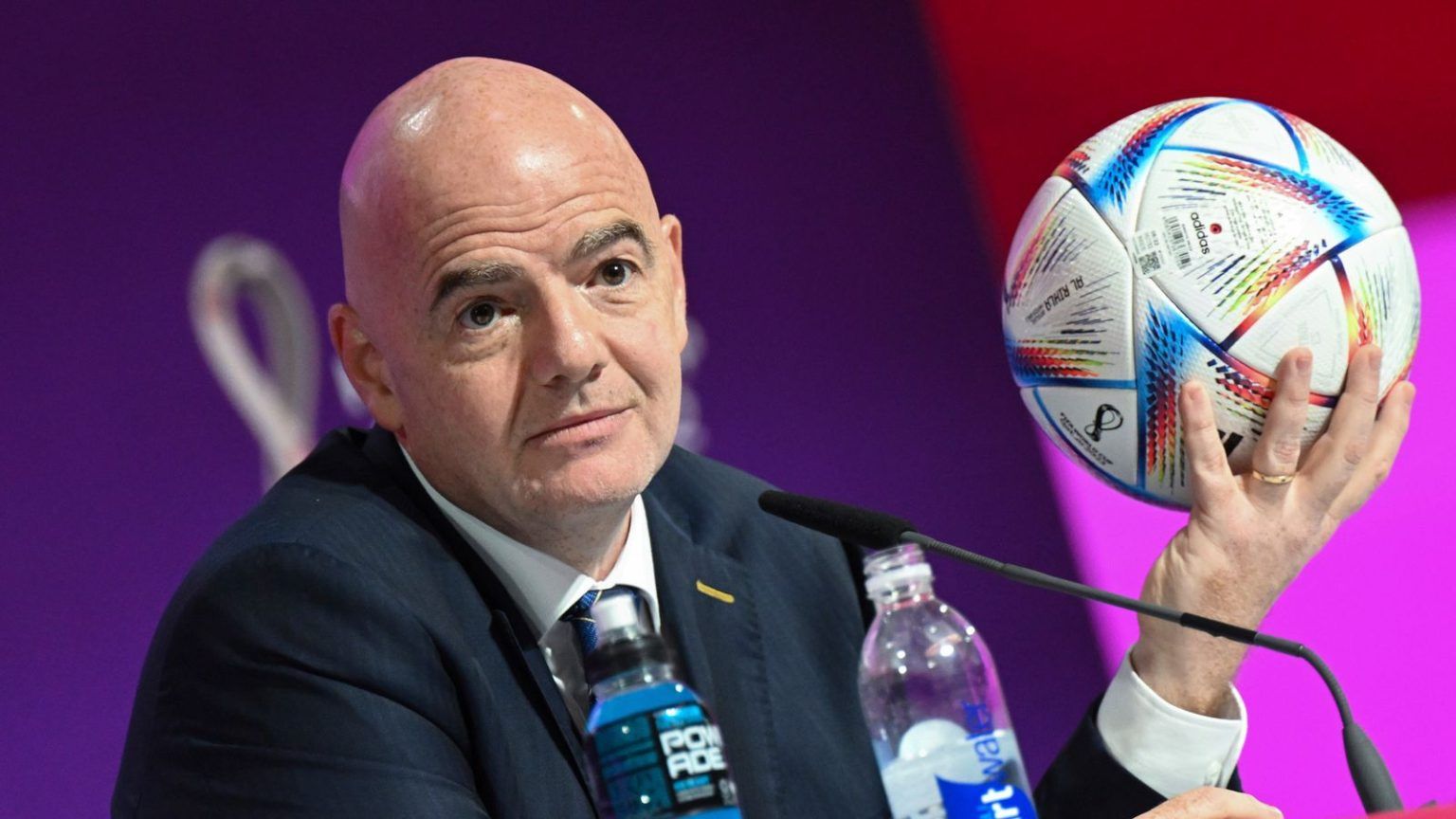
European football’s governing body, UEFA, has escalated its long-running dispute with FIFA by threatening legal action against FIFA President Gianni Infantino following the dramatic collapse of a controversial proposal to sell a stake in the commercial rights of the FIFA World Cup to private investors.
The unprecedented move marks one of the most serious governance crises in world football in recent years and has intensified pressure on Infantino ahead of the 2027 FIFA presidential election. UEFA’s legal warning comes after FIFA abandoned plans to create a commercial entity that would have allowed private investors to purchase a minority stake in future revenues generated by the men’s and women’s World Cups.
A Plan That Sparked Worldwide Opposition
The proposal was designed to create a new commercial subsidiary responsible for FIFA’s most valuable tournaments. Under the plan, FIFA intended to sell around 20 percent of the new company’s equity to private investors while maintaining control over football governance and sporting decisions.
The initiative was expected to raise approximately $4.2 billion in fresh investment, with the new company potentially being valued at around $20 billion. FIFA argued that the money would dramatically increase football development funding across the globe and benefit all 211 member associations.
However, critics immediately questioned whether football’s greatest tournament should ever become an investment asset.
UEFA was the first major football organization to publicly reject the proposal, describing it as a dangerous departure from FIFA’s traditional role as a non-profit governing body.
In an unusually strong statement issued last week, UEFA declared that football’s soul and governance “are not assets to trade” and insisted that “no one owns football.”
UEFA’s Legal Threat
Following FIFA’s decision to abandon the proposal amid growing resistance, UEFA has now confirmed it is considering legal proceedings.
According to multiple reports, lawyers representing UEFA have formally instructed FIFA executives to preserve all documents, emails, digital communications, and records relating to the failed proposal.
The legal notice warns against destroying or altering evidence and suggests UEFA may pursue legal or regulatory action concerning how the plan was developed and presented to FIFA’s member associations.
The warning significantly raises the stakes in the conflict between football’s two most powerful governing organizations.
Legal experts believe UEFA may seek greater transparency over the decision-making process, arguing that such a fundamental proposal affecting world football should never have been developed without broad consultation among national associations, clubs, leagues, players and supporters.
Why UEFA Objected
UEFA’s objections extended far beyond the financial structure of the proposal.
European football officials argued that introducing private investors into the World Cup’s commercial operations could fundamentally change FIFA’s priorities.
Instead of focusing solely on developing football worldwide, critics feared FIFA would increasingly prioritize generating higher financial returns for outside investors.
UEFA also warned that future commercial pressures could encourage FIFA to expand tournaments even further, increase the number of matches, or introduce additional competitions primarily to maximize profits rather than improve the sport.
The organization described the proposal as crossing “a line that football’s governing institutions should never cross.”
FIFA Forced Into Retreat
Facing mounting criticism from multiple confederations and national associations, FIFA ultimately withdrew the proposal before it could proceed to formal approval.
The reversal represented a significant setback for Infantino, who had strongly supported the initiative as a way of dramatically increasing investment in football development.
UEFA welcomed FIFA’s decision to abandon the plan but insisted that simply withdrawing it was not enough.
European officials argued that questions remain over how such a major proposal was developed in secrecy and why national associations were not consulted earlier in the process.
Growing Pressure on Infantino
The controversy has further weakened Infantino’s political standing.
Although the FIFA president has previously enjoyed overwhelming international support, reports now suggest several European football associations are reconsidering their backing ahead of the next FIFA presidential election.
Some national associations have reportedly discussed withdrawing previous letters supporting Infantino’s leadership, an extraordinary development given his previously dominant position within world football.
UEFA President Aleksander Čeferin has emerged as one of Infantino’s strongest critics, accusing FIFA of pursuing major structural changes without sufficient transparency.
The latest dispute adds another chapter to years of tension between the two football leaders.
Support Beyond Europe
Despite growing opposition within Europe, Infantino continues to enjoy considerable backing from several other regions.
Many member associations from Africa, South America and parts of Asia have previously supported his leadership, largely because of FIFA’s increased financial assistance programs and development funding.
However, analysts suggest the failed commercialization proposal may also have unsettled some of those supporters.
The controversy has raised broader concerns about FIFA’s governance, regardless of geographical region, and some federations are expected to review their positions in the coming months.
Critics Question FIFA Governance
Former FIFA vice-president Jim Boyce has joined the criticism, describing the commercialization proposal as “ludicrous.”
Boyce argued that FIFA should remain focused on promoting football rather than creating structures designed to attract private investors.
He also warned that the controversy has damaged FIFA’s credibility at a time when trust in football governance is already under scrutiny.
According to Boyce, rebuilding confidence among supporters, players and member associations should now become FIFA’s immediate priority.
What the Proposal Would Have Meant
Had the proposal succeeded, FIFA would have created a new commercial company responsible for managing many of its business operations.
Private investors would have purchased a minority stake in the company, gaining exposure to revenues generated by tournaments including the FIFA World Cup.
Although FIFA insisted it would retain control over football governance, opponents argued that commercial investors would inevitably seek greater financial returns, creating pressure to maximize revenues.
Critics feared this could influence future decisions regarding tournament formats, broadcasting arrangements, sponsorship agreements and scheduling.
Supporters of the proposal, however, argued that the billions raised would have significantly increased investment in grassroots football worldwide.
Possible Legal Consequences
UEFA has not yet specified exactly what legal action it intends to pursue.
Possible avenues could include regulatory complaints, governance challenges or legal proceedings relating to transparency and fiduciary responsibilities.
The instruction to preserve documents suggests UEFA expects a detailed examination of internal communications surrounding the proposal.
Whether the dispute eventually reaches court remains uncertain, but the legal warning alone represents an extraordinary escalation between football’s two most influential governing bodies.
Impact on World Football
The collapse of the commercialization proposal has exposed deep divisions within international football governance.
For many supporters, the controversy has reignited longstanding debates over FIFA’s transparency, accountability and decision-making processes.
Some observers believe the dispute could ultimately lead to reforms requiring greater consultation before major commercial or governance changes are introduced.
Others fear that prolonged conflict between FIFA and UEFA could complicate future cooperation on international competitions and football development projects.
Looking Ahead
As preparations continue for future FIFA competitions, attention will increasingly turn toward the organization’s leadership.
Infantino now faces the challenge of restoring confidence among member associations while defending his broader vision for FIFA’s future.
UEFA, meanwhile, appears determined to ensure that similar commercialization proposals do not return without extensive consultation.
Whether the threatened legal action proceeds or results in a negotiated settlement, the episode has already become one of the most significant governance controversies in modern football.

For now, the World Cup remains entirely under FIFA’s ownership, but the failed commercialization plan has fundamentally changed the political landscape of world football. With UEFA demanding accountability and scrutiny intensifying across the global game, the coming months could shape not only Infantino’s future but also the governance of football’s biggest tournament for years to come.

