|
Getting your Trinity Audio player ready…
|
Scientists have long known that moths possess an extraordinary sense of smell, using their highly sensitive antennae to locate flowers, avoid predators, and even find mates from remarkable distances. However, new research has revealed an unexpected twist to this familiar story: moths may also be able to detect odors with their wings.
The discovery is changing how researchers understand insect senses and could inspire future innovations in robotics, pest control, and sensory technology.

A Surprising Discovery
For decades, biology textbooks have described insect antennae as the primary organs responsible for detecting chemical signals in the environment. These structures are packed with tiny sensory hairs that contain specialized receptors capable of identifying countless scents.
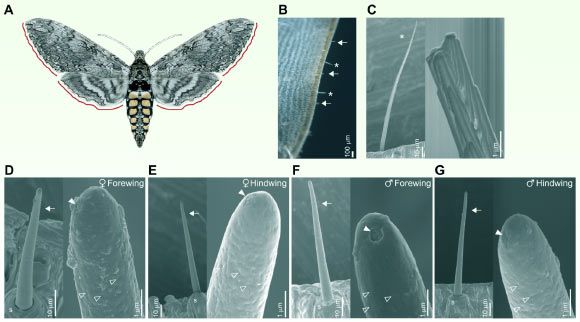
But scientists studying moths recently found evidence that their wings also contain sensory receptors capable of responding to airborne chemicals.
The finding suggests that the wings do much more than simply enable flight. Instead, they may serve as an additional sensory system that helps moths gather information about their surroundings while flying.
Researchers say this dual-sensing ability could give moths an evolutionary advantage, allowing them to make faster decisions as they navigate through forests, fields, and gardens.
How the Study Was Conducted
The research team examined the wings of several moth species using high-powered microscopes and advanced genetic techniques.
They discovered tiny sensory structures scattered across the wing surfaces. These structures appeared similar to sensory organs previously found on antennae.
To determine whether the structures could actually detect odors, scientists exposed moth wings to different airborne chemical compounds.
Electrical recordings showed measurable responses when certain scents reached the wings, indicating that specialized cells were reacting to the chemicals.
Further molecular analysis revealed the presence of proteins associated with odor detection, strengthening the evidence that moth wings possess functional smell receptors.
Although the antennae remain the insects’ primary smelling organs, the wings appear capable of providing additional chemical information during flight.
Why Wings Would Need to Smell
At first glance, the idea of smelling with wings may seem unnecessary. However, researchers believe there are several reasons why evolution may have favored this ability.
When moths are flying, their wings constantly move through the air, creating opportunities to encounter scent molecules before those molecules reach the antennae.
The wings may therefore act as an early-warning system, helping moths detect changes in odor concentration almost instantly.
This could improve their ability to:
- Locate flowers containing nectar.
- Identify suitable plants for laying eggs.
- Detect nearby mates.
- Sense predators or dangerous environments.
- Navigate toward food sources more efficiently.
Scientists believe combining information from both antennae and wings could create a more complete picture of the chemical landscape surrounding a flying moth.
A New Understanding of Insect Senses

The discovery highlights just how sophisticated insects truly are.
Despite their tiny brains, moths perform complex behaviors every night. They migrate across long distances, avoid obstacles, find food in darkness, and locate partners using incredibly faint scent trails.
Researchers increasingly believe these remarkable abilities depend on multiple sensory systems working together.
Instead of relying on a single organ, moths may integrate information from their eyes, antennae, body hairs, legs, and now their wings.
This multi-sensory approach allows them to react rapidly to constantly changing environments.
Implications Beyond Moths
The findings could extend beyond moths.
Scientists are now investigating whether butterflies and other winged insects possess similar odor-detecting structures.
If confirmed, it would suggest that wing-based smell evolved much earlier than previously believed and may be widespread among insects.
Researchers are also exploring whether bees, wasps, flies, and mosquitoes have comparable sensory capabilities.
Understanding how different insects process chemical information could reshape the field of insect neuroscience.
Potential Benefits for Agriculture
The discovery may eventually lead to improved pest management strategies.
Many moth species are agricultural pests whose caterpillars damage crops including corn, cotton, rice, vegetables, and fruit trees.
If scientists better understand how moths detect plant odors during flight, they may be able to develop more effective traps or environmentally friendly repellents.
Instead of relying heavily on chemical pesticides, farmers could potentially use scent-based technologies that interfere with insects’ ability to locate crops or mates.
Such approaches could reduce pesticide use while protecting beneficial insects.
Inspiration for New Technology
Nature often inspires engineering breakthroughs.
Researchers believe moth wings could provide valuable ideas for designing lightweight chemical sensors.
Future drones or robots might incorporate odor-detecting surfaces modeled after insect wings.
These technologies could help detect hazardous gas leaks, locate disaster survivors, monitor environmental pollution, or identify dangerous chemicals in industrial settings.
Because insects accomplish these tasks using extremely small and energy-efficient sensory systems, engineers are eager to understand the biological mechanisms involved.
Questions Still Remain
Although the evidence is compelling, scientists emphasize that much remains unknown.
Researchers are still trying to determine:
- How sensitive the wing receptors are compared to antennae.
- Which odors the wings detect most effectively.
- How information from the wings reaches the moth’s nervous system.
- Whether different moth species use wing smell differently.
- How wing-based odor detection influences flight behavior.
Future studies will involve observing moths in natural environments to understand how this newly discovered sensory ability affects real-world behavior.
Expanding Our View of Nature
Discoveries like this remind scientists that even familiar creatures continue to hold remarkable secrets.
Moths have existed for millions of years and are among the most thoroughly studied insects, yet researchers are still uncovering entirely new aspects of their biology.
The finding demonstrates that evolution often equips animals with unexpected solutions to life’s challenges.
As technology improves, scientists are likely to discover even more hidden sensory abilities across the animal kingdom.
For now, the idea that moths can smell with their wings offers another fascinating example of nature’s ingenuity. It challenges long-held assumptions about insect biology and opens exciting new avenues for research into evolution, behavior, and bio-inspired technology.
Whether helping moths find flowers under the cover of darkness or inspiring the next generation of chemical-sensing devices, these remarkable wings appear to serve a far greater purpose than simply keeping insects airborne.

