|
Getting your Trinity Audio player ready…
|

For many people in the United Kingdom, the summer of 1976 remains the benchmark against which every other hot summer is measured. Ask someone who lived through it, and they may recall endless sunshine, dried-up rivers, cracked lawns, water shortages, and unusually warm nights. The heatwave became part of British culture, remembered almost as much for its social impact as for the temperatures themselves.
However, the UK has experienced several remarkable heatwaves in recent decades, including those in 2003, 2018, 2022, 2023, and beyond. These recent events have prompted many people to ask an important question: Was 1976 really hotter, or does it simply live larger in people’s memories?
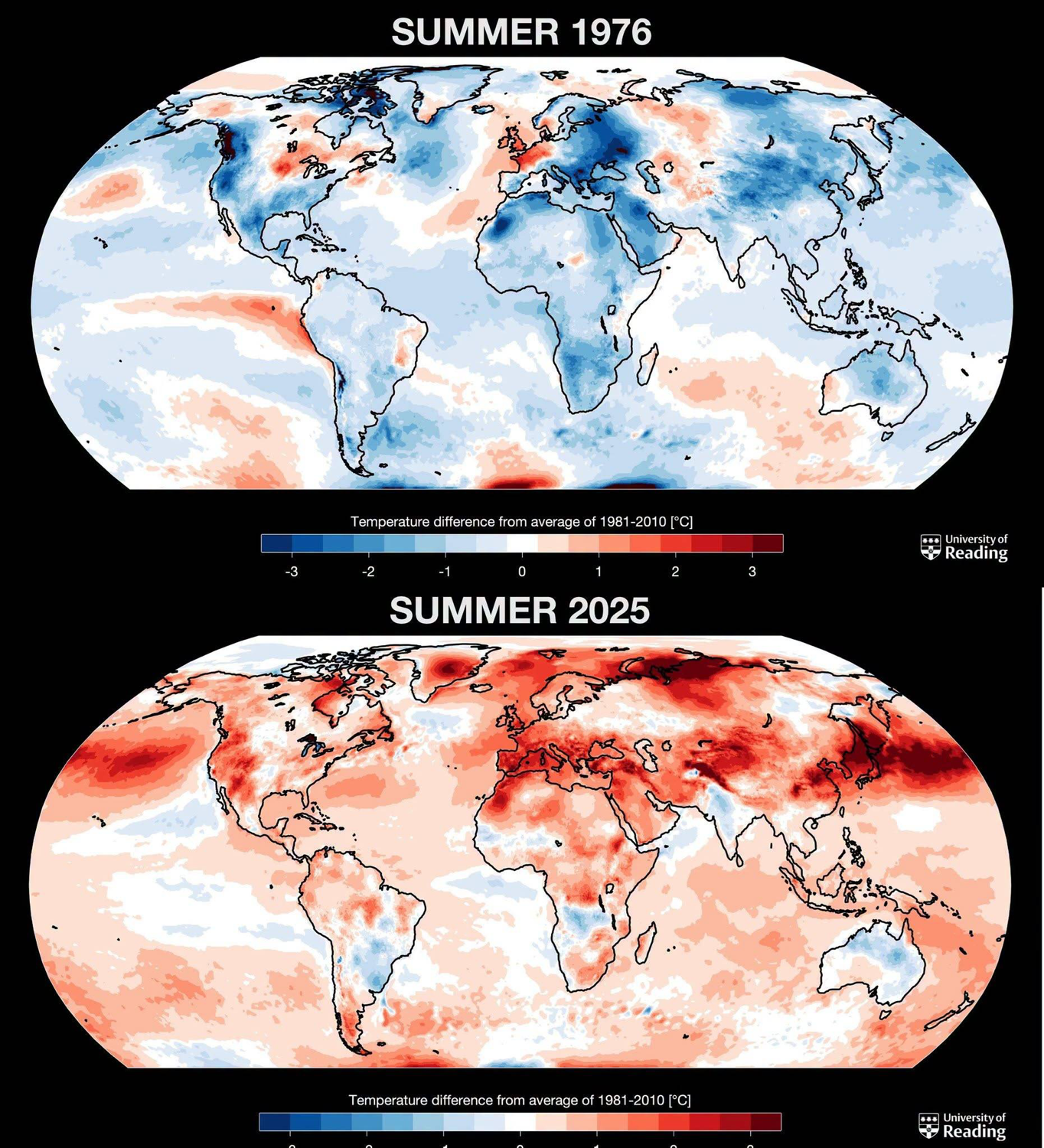
The answer is more complex than a simple comparison of temperatures. While 1976 was exceptional for its duration, today’s heatwaves are becoming more intense, with higher peak temperatures and more frequent extreme weather events.
The Summer That Everyone Remembers
The heatwave of 1976 did not arrive overnight. Spring had already been unusually dry, leaving much of the country with little rainfall before summer even began. By June, temperatures were climbing steadily, and the weather settled into a pattern of almost uninterrupted sunshine.
For weeks, much of England and Wales experienced hot, dry conditions. Some areas went well over a month with virtually no meaningful rainfall. Grass turned yellow, parks became dusty, reservoirs shrank dramatically, and rivers reached unusually low levels.
Unlike today’s era of widespread air conditioning, most British homes, schools, hospitals, and workplaces had few ways of coping with prolonged heat. Fans were uncommon, and buildings were designed primarily to keep warmth inside during winter rather than release it during summer.
As the weeks passed, the hot weather became a national talking point.
Water Shortages
One of the defining features of 1976 was not simply the temperature but the drought that accompanied it.
Large areas of southern England faced serious water shortages. Reservoir levels dropped dramatically, and many local authorities introduced standpipes in streets, where residents collected water in buckets and containers.
Households were encouraged to conserve every litre possible. Washing cars, watering gardens, and filling paddling pools were discouraged or banned in many areas.
The drought became severe enough for the government to appoint a minister specifically responsible for coordinating the national response—a role that became popularly known as the “Minister for Drought.”
For many families, memories of queuing for water remain stronger than memories of the heat itself.
Temperatures During 1976
The summer of 1976 produced many days with temperatures above 30°C across southern Britain.
Several locations exceeded 35°C, an extraordinary figure for the UK at the time.
Perhaps even more remarkable was the consistency of the warmth. Instead of experiencing one or two isolated hot days, many regions endured weeks of above-average temperatures.
Night-time temperatures also remained unusually high, offering little relief after sunset.
This combination of persistent daytime heat and warm nights made the summer feel relentless.
Why People Remember It So Clearly
Human memory often places great importance on unusual experiences.
For older generations, 1976 represented something entirely outside normal expectations. Britain was generally regarded as a cool, often rainy country.
Suddenly, people were spending weeks under blue skies, rivers were drying up, crops were failing, and newspapers carried daily stories about the drought.
Children played outside until late evening, families flocked to beaches, and ice cream sales soared.
For many people, it became one of the defining summers of their lives.
Heatwaves Since 1976
Although 1976 held its legendary status for decades, several more recent summers have challenged its reputation.
The heatwave of 2003 brought unusually high temperatures across Europe and contributed to thousands of heat-related deaths across the continent.
The summer of 2018 featured long periods of sunshine, widespread drought conditions, and major agricultural impacts throughout the UK.
However, the most dramatic change came in July 2022.
For the first time in recorded UK history, temperatures exceeded 40°C.
This represented a psychological as well as meteorological milestone.
Many experts had once believed such temperatures would be extremely unlikely in Britain.
Yet they became reality.
Comparing 1976 and Today
One of the biggest differences between 1976 and modern heatwaves lies in what is being measured.
The 1976 heatwave is remembered primarily for its length.
Recent heatwaves are increasingly notable for their intensity.
For example:
- 1976: Exceptionally long-lasting heat and drought.
- 2022: Record-breaking peak temperatures.
- 2018: Prolonged sunshine combined with agricultural drought.
- 2023 onward: More frequent periods of unusually high temperatures.
Rather than replacing 1976, recent heatwaves have added new dimensions to Britain’s experience of extreme weather.
The Role of Climate Change
Climate scientists have observed that average UK temperatures have increased significantly over recent decades.
A warmer atmosphere makes extreme heat events more likely.
It also increases the probability that previous temperature records will be broken.
Studies suggest that climate change has greatly increased the likelihood of temperatures exceeding 40°C in the UK.
This does not mean every hot summer is caused solely by climate change.
Weather patterns still vary naturally.
However, the background climate is now warmer than it was in the 1970s, meaning today’s heatwaves begin from a higher baseline.
Infrastructure Challenges
Britain’s infrastructure was largely built for cool weather.
Roads, railway lines, schools, hospitals, and homes were not designed for prolonged periods above 35°C.
Recent heatwaves have exposed these weaknesses.
Rail tracks have buckled.
Road surfaces have melted.
Hospitals have experienced increased admissions related to heat.
Schools have adjusted schedules during exceptionally hot periods.
Public transport has occasionally faced major disruption.
These issues were less widely discussed in 1976 simply because temperatures rarely approached today’s extremes.
Health Impacts
Extreme heat affects health in many ways.
Older adults, young children, and people with chronic illnesses face the greatest risks.
Heat exhaustion and heatstroke become more common during prolonged hot weather.
Warm nights are particularly dangerous because the human body has less opportunity to cool down during sleep.
Public awareness of these risks has grown substantially in recent years.
The UK now issues heat-health alerts and provides advice to help vulnerable people remain safe.
Agriculture
Both 1976 and recent heatwaves have had major consequences for farming.
Dry soils reduce crop yields.
Livestock require more water.
Grass used for grazing can disappear entirely during prolonged drought.
Farmers have increasingly had to adapt through improved irrigation, drought-resistant crops, and changing planting schedules.
Agriculture remains one of the sectors most vulnerable to prolonged periods of extreme heat.
Public Attitudes
British attitudes toward hot weather have also evolved.
In 1976, many people viewed prolonged sunshine as a novelty.
Today, there is greater awareness that extreme heat can pose genuine dangers.
People are more likely to monitor weather forecasts, stay hydrated, avoid strenuous outdoor activity during the hottest parts of the day, and check on vulnerable neighbours.
Heat is increasingly treated as a public health issue rather than simply pleasant summer weather.
Technology Makes a Difference
Modern technology has changed how people experience heatwaves.
Weather forecasting is far more accurate.
Homes increasingly use portable air-conditioning units or improved insulation.
Supermarkets maintain chilled food more effectively.
Mobile phones provide instant weather alerts.
Employers can implement flexible working arrangements during periods of extreme heat.
These advances reduce some of the disruption that people experienced in 1976.
Which Was Worse?
The answer depends on the criteria used.
If measuring duration, the summer of 1976 remains one of Britain’s greatest heatwaves.
If measuring highest temperatures, modern heatwaves have surpassed it.
If measuring public memory, 1976 still occupies a unique place in British history.
For those who experienced it, the combination of relentless sunshine, drought, standpipes, and weeks of exceptional weather created memories that have lasted for half a century.
For younger generations, however, the summers of 2018 and particularly 2022 may become equally defining events.
Looking Ahead
Scientists expect heatwaves in the UK to become more frequent and more intense during the coming decades if global temperatures continue to rise.
This means the question may eventually change from “Was 1976 the hottest?” to “When will the next record be broken?”
Communities, governments, businesses, and households are increasingly planning for hotter summers through improved building design, better water management, greener urban spaces, and stronger public health measures.
Conclusion
The legendary heatwave of 1976 occupies a special place in British history because it combined extraordinary heat with an exceptionally severe drought that transformed everyday life. Water restrictions, dried-up landscapes, and weeks of uninterrupted sunshine left a lasting impression on millions of people, making it one of the country’s most memorable summers.
Recent heatwaves, however, tell a different story. While they may not always last as long, they have reached even higher temperatures, culminating in the UK’s first recorded day above 40°C. These events reflect a changing climate in which extreme heat is becoming more common and more intense.
Rather than viewing 1976 and today’s heatwaves as competing records, they represent two different eras. The summer of 1976 remains the symbol of endurance and drought, while modern heatwaves illustrate the growing challenge of increasingly extreme temperatures. Together, they reveal how the UK’s climate has evolved—and why preparing for hotter summers is becoming an essential part of the country’s future.

