|
Getting your Trinity Audio player ready…
|

Waymo Recalls Over 3,800 Robotaxis That Might Drive Onto Closed Freeways
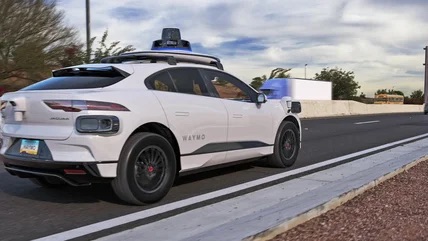
Self-driving vehicle company Waymo has recalled more than 3,800 robotaxis in the United States after identifying a software issue that could cause some vehicles to enter freeways that have been closed to traffic. The recall marks another significant moment in the development of autonomous driving technology, highlighting both the progress and the ongoing challenges facing the industry.
Waymo, a subsidiary of Alphabet Inc., is widely regarded as one of the leaders in autonomous vehicle technology. Its driverless taxi services operate in several U.S. cities and have completed millions of passenger trips. However, even advanced systems can encounter unexpected situations, and regulators continue to closely monitor how autonomous vehicles handle unusual road conditions.
What Prompted the Recall?
According to reports, the recall affects more than 3,800 autonomous vehicles equipped with Waymo’s self-driving software. The issue involves situations in which a freeway has been officially closed due to construction, accidents, maintenance work, emergency situations, or other traffic disruptions.
Under certain circumstances, the software could fail to properly recognize that the freeway was closed and might attempt to route the vehicle onto the restricted roadway. While no serious injuries have been linked to the issue, regulators and the company determined that the potential safety risk warranted corrective action.
The recall was initiated after investigations identified instances in which the autonomous driving system did not respond as expected when encountering freeway closure information.
Why Closed Freeways Are Challenging
For human drivers, freeway closures can already be confusing.
Drivers often encounter temporary signs, electronic message boards, cones, barricades, flashing lights, and directions from traffic officers. Understanding and reacting appropriately requires interpreting multiple sources of information simultaneously.
For autonomous vehicles, these situations can be even more complex.
Self-driving systems rely on a combination of:
- Cameras
- Radar sensors
- LiDAR sensors
- High-definition maps
- Real-time traffic information
- Artificial intelligence decision-making systems
When temporary road conditions differ from preexisting map data, autonomous systems must accurately recognize the change and adjust their routes. Freeway closures represent a particularly challenging scenario because they often occur suddenly and may vary from one situation to another.
How Waymo Addressed the Problem
Waymo stated that it has developed and deployed a software update designed to prevent affected vehicles from entering closed freeway sections.
Unlike traditional automotive recalls that often require physical repairs at dealerships, many software-related recalls involving autonomous vehicles can be resolved remotely through over-the-air updates.
These updates allow manufacturers to modify vehicle behavior without requiring owners or operators to bring vehicles in for service.
Waymo reported that the updated software improves the vehicle’s ability to recognize freeway closure conditions and choose safer alternative routes when necessary.
The Growing Scrutiny of Autonomous Vehicles
The recall comes at a time when self-driving technology remains under intense public and regulatory scrutiny.
Autonomous vehicle companies argue that their systems have the potential to significantly reduce traffic accidents caused by human error, which contributes to the vast majority of road crashes worldwide.
However, critics point out that self-driving systems must be capable of safely handling countless unusual scenarios before widespread deployment can be fully trusted.
Every incident, software bug, or recall receives substantial attention because of the industry’s promise to deliver safer transportation.
Government agencies continue to investigate incidents involving autonomous vehicles to ensure that safety standards are being met as the technology evolves.
Waymo’s Position in the Industry
Despite the recall, Waymo remains one of the most advanced autonomous driving companies currently operating.
The company’s robotaxis provide fully driverless rides in select cities and have accumulated millions of miles of real-world driving experience. This extensive operational history gives Waymo a significant advantage compared to many competitors still testing their systems.
The company has consistently emphasized a safety-first approach, often taking years to validate software improvements before deploying them at scale.
Industry experts note that identifying issues and correcting them through recalls is a normal part of developing complex transportation technologies.
What This Means for Passengers
For passengers using Waymo’s robotaxi services, the recall is unlikely to result in major disruptions.
Because the issue can largely be addressed through software updates, affected vehicles can receive the necessary corrections relatively quickly.
Customers may not notice any visible changes to their rides. The primary difference will be improved handling of freeway closure situations behind the scenes.
Waymo says its goal remains providing safe, reliable, and efficient transportation while continuously improving its autonomous systems.
Looking Ahead
The recall serves as a reminder that autonomous driving technology is still evolving.
While robotaxis have demonstrated impressive capabilities, edge cases such as temporary road closures continue to challenge even the most sophisticated artificial intelligence systems. Addressing these rare but important situations is a critical step toward building public trust in self-driving vehicles.
For Waymo, the recall represents both a setback and an opportunity. By identifying the issue, deploying a fix, and working with regulators, the company aims to demonstrate that autonomous vehicles can be improved rapidly when problems emerge.
As self-driving technology expands into more cities and carries more passengers, the industry’s ability to respond transparently to safety concerns will remain one of the key factors determining its long-term success.