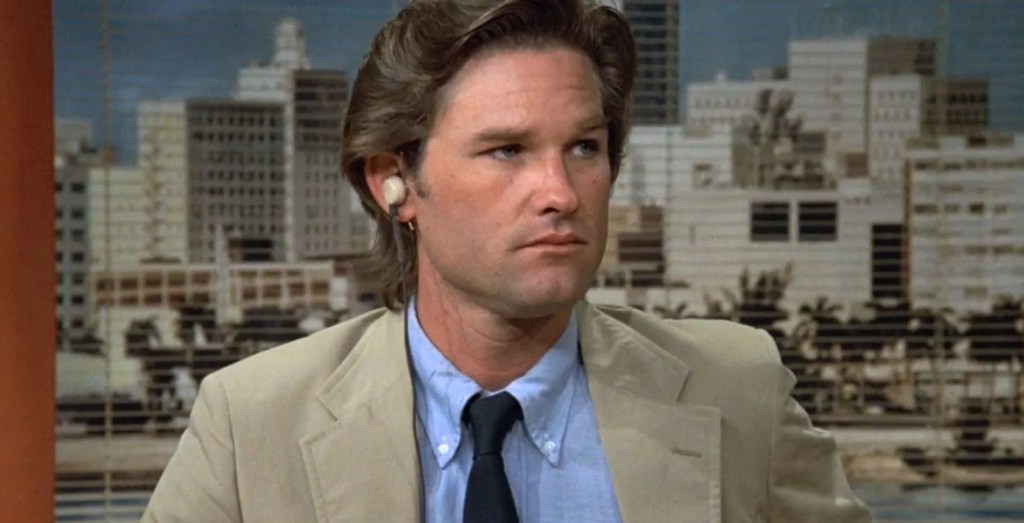
A violent storm brews off the coast of Puerto Rico, and the entire state is hot and sticky in anticipation of its arrival. However, in Miami, another kind of violent storm rocks the city. The Mean Season is a 1985 thriller set against the backdrop of the Miami hurricane season, starring Kurt Russell, Mariel Hemingway, and Richard Jordan. The film is a gripping take on the serial killer horror sub-genre. And though The Mean Season predates the boom of serial killer films, which the release of The Silence of The Lambs inspired, it contains a lot of the same themes audiences would appreciate in later entries in the genre. But despite being a tense and horrifying thriller, audiences at the time didn’t seem to show up, let alone care for it. The Mean Season would go on to make less than its budget at the box office and has stayed largely buried, even today.
‘The Mean Season’ Tackles the Exploitative Nature of True Crime Media
The Mean Season explores the exploitative nature of true crime coverage in the media through Malcolm Anderson (Russell), a journalist hoping to leave his career covering crime and murders but finds himself caught up in the Numbers Killer (Jordan) after he writes about his first victim. The Mean Season, like Zodiac, focuses on the tension between the news industry’s obligation to inform the public and its obligation to make money. Based on the novel In The Heat of The Summer by John Katzenbach, the film has unique insight into the inner workings of the journalism industry.
The film utilizes shots of the literal machines used to print newspapers as transitions between scenes to really hammer home the mechanical nature of true crime journalism. Anderson goes from a journalist who simply reports the news to a man who becomes the news after the Numbers Killer establishes him as his main contact. This story could make his career — but it also begins with the death of an innocent teenage girl. The Mean Season questions the apathetic voyeurism required to make a career out of this kind of reporting without resorting to it itself. The audience never becomes witness to any of the victims’ deaths directly, and while Anderson is visibly disgusted when he sees the bodies, other reporters and photographers leap at the chance to get their shot.
‘The Mean Season’ Brings the Heat in More Ways Than One

At the core of The Mean Season lies mundane domestic tension that soon turns sour. Russell’s Malcolm Anderson has promised to leave his esteemed but
stressful job as a Miami journalist to move to a small town in Colorado with his girlfriend Christine Connelly (Hemingway). And though a dynamic like this could leave audiences thinking of Malcolm as inconsiderate and self-centered, or Christine as a nag, The Mean Season succeeds in demonizing neither. And though, as Malcolm delves farther and farther down the dark path of his Numbers Killer investigation, his refusal to leave it drives a wedge between them, it’s understandable and compelling to see why. Christine isn’t simply frustrated he’s put off their plans to move to a more peaceful place; she’s scared for him. Scared that, not only will his hunt for the killer put him in physical danger, but scared of the impact it might have on his psyche too. The farther Malcolm falls into the Number Killer’s web, the more distant he becomes from her. In a twisted sense, the Numbers Killer almost becomes a romantic rival for Christine. It isn’t just Malcolm’s actual time he takes up, but space in his thoughts too. Like a mistress he’s too embarrassed to admit to, Malcolm insists that he’s not getting in too deep. But regardless of what he says, he’s still out late and distant and waiting by the phone for someone who isn’t her. Someone who might very well kill them both.
This domestic struggle between Malcolm and Christine would fall incredibly flat under lesser actors. Russell and Hemingway alike have fantastic romantic chemistry that makes it easy to root for them. Russell is as charming as he quite often is, but Hemingway really brings something unique to the film. Mariel Hemingway somehow manages to play Christine, not only as the bereaved spouse of an investigator who’s gone too far but also as the sole voice of reason too. Despite the narrative having plenty of journalists and police officers, she seems to be the only person who responds to the Numbers Killer and his games rationally. Everyone else seems to have an apathetic, if not voyeuristic, response to the killings, but she recognizes how sick and twisted they truly are. In a film full of characters trying to get their payday through this series of tragedies, Christine becomes the moral center. A beaconing light for Malcolm to return to, it is ultimately her presence that keeps him from getting lost in the sick game the Numbers Killer is trying to play.
 ☄️WELCOME TO FACENOTEE.COM🕳️👍🏿
Leave a comment