The history of spans thousands of years and includes some of the most powerful empires in African history, as well as colonial rule and modern independence.

Early Civilizations and Trade
Long before written records, the region that is now Mali was inhabited by various farming and fishing communities along the Niger River. By around 1000 BCE–500 CE, societies were already trading goods like gold, salt, and ivory across the Sahara Desert.
The Trans-Saharan trade routes connected West Africa to North Africa and the Mediterranean, making the region wealthy and culturally vibrant.
The Ghana Empire (c. 300–1200)
The first major empire in the region was the (not located in modern Ghana). It became rich by controlling gold and salt trade routes.
- Capital: Kumbi Saleh
- Religion: Traditional beliefs (later influenced by Islam)
- Decline: Around the 11th–12th century due to invasions and internal struggles
The Mali Empire (c. 1230–1600)
The succeeded Ghana and became one of the richest empires in history.
- Founder:
- Peak ruler: (14th century), famous for his lavish pilgrimage to Mecca
- Key cities: Timbuktu and Djenné, centers of Islamic learning
Mali controlled vast territories and became a hub of education, trade, and culture.
The Songhai Empire (c. 1460–1591)
After Mali weakened, the rose to power.
- Capital: Gao
- Notable ruler:
- Strength: Highly organized government and army
It collapsed in 1591 after a Moroccan invasion using gunpowder weapons.
Colonial Period (19th–20th Century)
By the late 1800s, France conquered the region, making it part of French Sudan within French West Africa.
- Colonization brought railways and new administration
- Local resistance occurred but was suppressed
- Traditional systems were disrupted
Independence and Modern Mali (1960–Present)
Mali gained independence from France in 1960.
- First president:
- Early years: Socialist policies and one-party rule
- Later: Military coups and transitions to democracy
Recent challenges:
- Political instability and coups (notably 2012 and 2020)
- Conflict involving Tuareg groups and Islamist militants in the north
- International peacekeeping efforts
Summary
Mali’s history is marked by:
- Powerful trading empires (Ghana, Mali, Songhai)
- Cultural and intellectual achievements (especially in Timbuktu)
- Colonial rule under France
- Ongoing political and security challenges since independence


The story of Mali is rich and goes back hundreds of years, especially known for one of the greatest empires in African history—the Mali Empire.
Early beginnings
Before Mali became a country, the region was part of earlier West African kingdoms. One of the strongest was the Ghana Empire, which controlled trade in gold and salt. After its decline, new kingdoms rose, including Mali.
Rise of the Mali Empire
The Mali Empire was founded in the 13th century by a legendary ruler called . He defeated his enemies at the Battle of Kirina around 1235 and united many kingdoms under Mali.
Under his leadership and his successors, Mali became one of the richest and most powerful empires in the world at that time. Wealth and trade
Mali was famous for its huge gold resources. It controlled important trade routes across the Sahara Desert. Traders exchanged gold, salt, ivory, and other goods.
Cities of learning
The empire included famous cities like:
Timbuktu – a major center of learning and Islamic scholarship
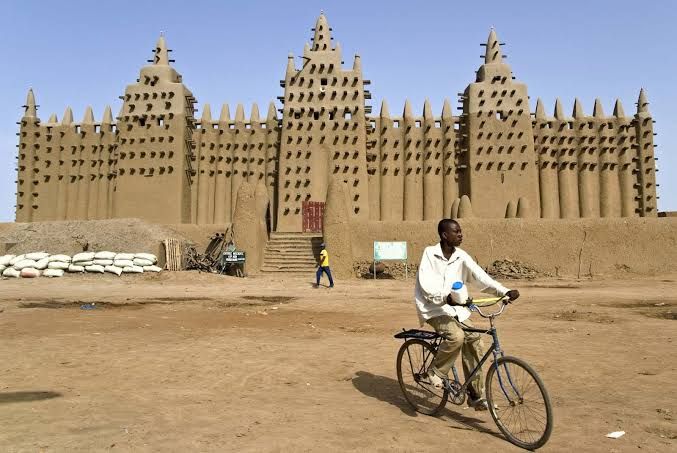
Djenné – known for trade and architecture
Mansa Musa and world fame
One of Mali’s most famous rulers was Mansa Musa, who ruled in the 14th century. He is often considered one of the richest people in history. His pilgrimage to Mecca made Mali famous across Africa, Europe, and the Middle East because he distributed so much gold along the way.
Decline of the empire
After many years, the Mali Empire began to weaken due to internal conflicts, weak leadership, and attacks from neighboring groups. Eventually, it broke into smaller kingdoms.
Modern Mali
Modern Mali became a French colony in the late 1800s and was called French Sudan. It gained independence on September 22, 1960, becoming the Republic of Mali.
Today
Today, Mali is a West African country known for its history, culture, music, and ancient heritage, especially the legacy of the Mali Empire.
Leave a Reply