The 2026 NBA Draft class is special. That much is certain. Much will change in the months to come, of course, as there’s still a full conference schedule and postseason tournaments on the horizon, not to mention the looming specter of NIL, which will rope plenty of qualified prospects into another year of school. But, as things stand, this is a uniquely dominant freshman class, with plenty of high-level upperclassmen alongside them. From Cam Boozer’s analytics-friendly interior dominance, to the effortless three-level scoring of Darryn Peterson or the showtime athleticism of AJ Dybantsa, the debates should give us all plenty to chew on.
Lions GM Brad Holmes Takes Accountability For Failed Season
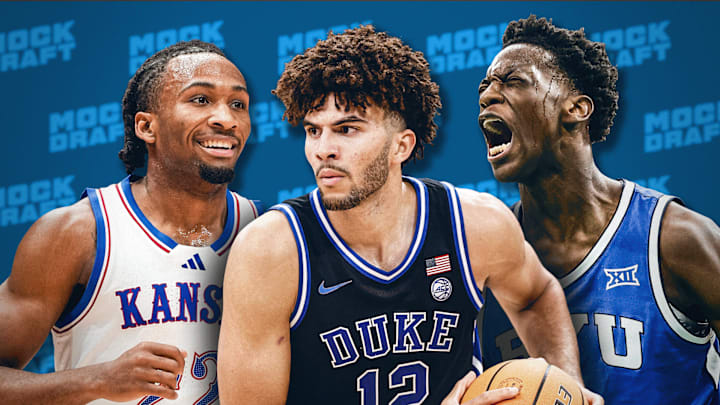
We simulated the lottery for this mock draft via Tankathon, in keeping with tradition. Here is how our updated 2026 NBA mock draft shapes up:
1. Indiana Pacers: Cam Boozer, F, Duke
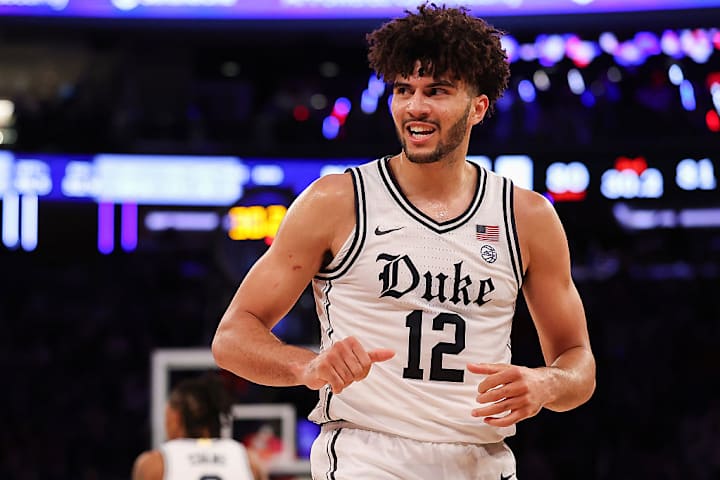
Height: 6’9
Weight: 235
Class: Freshman
Draft Age: 18
Indiana gets the pick of the litter at No. 1 and has no shortage of franchise-altering options, but Cam Boozer — the best player in college basketball as an 18-year-old — gets the nod. The Pacers can (and should) expect to contend next season upon Tyrese Haliburton’s return. Boozer is the most polished of an elite freshman class, with a level of strength, IQ and footwork rarely seen at such a young age. He can help add wins to Indy’s record from day one.
There are valid defensive concerns with Boozer, amplified by the Pacers’ current lack of depth up front, but he should handle his position fine enough. Especially if Indiana can add a proper rim protector via free agency or trade. On offense, Boozer’s finishing, connective passing and general well-roundedness should pair beautifully with fellow basketball genius Haliburton. Indiana will have two selfless hubs who can pressure and ultimately break a defense in different ways. The Pacers would be very scary, very quickly.
2. Charlotte Hornets: Darryn Peterson, G, Kansas
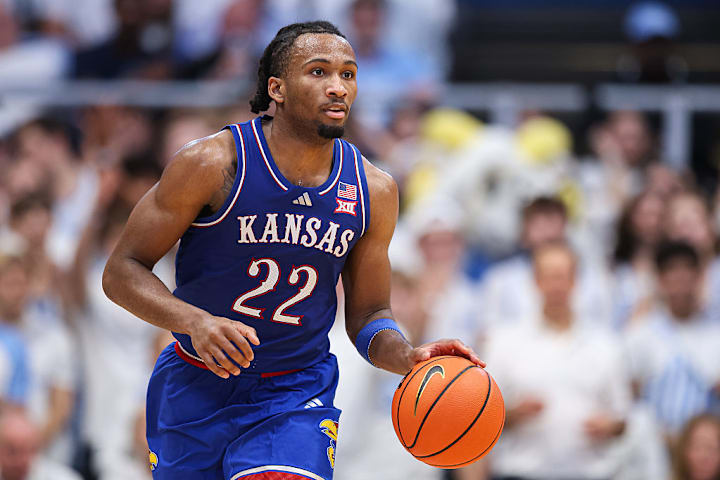
Height: 6’5
Weight: 195
Class: Freshman
Draft Age: 19
Darryn Peterson would be a totally worthy No. 1 pick; he’s the best guard prospect of the last decade, perhaps stretching back even further. The Charlotte Hornets can view him as a LaMelo Ball replacement or a LaMelo Ball complement. Either way, Peterson fits the front office’s high-character mandate and provides Charlotte with a singularly versatile and dynamic weapon in the backcourt.
Peterson’s game features precious few holes. He’s an electric three-level shot-maker, able to create his own looks with bursty handles and refined footwork. But he’s also an off-ball savant, comfortable firing off the catch, blitzing closeouts, and doing the small things to make an offense hum. He’s also one of the best perimeter defenders in his class, with the length and athleticism to guard all over the floor, combined with the instincts and intensity to consistently muck things up for the opponent. Hornets fans can start getting really excited about the future.
3. Atlanta Hawks (via NOP): AJ Dybantsa, F, Brigham Young
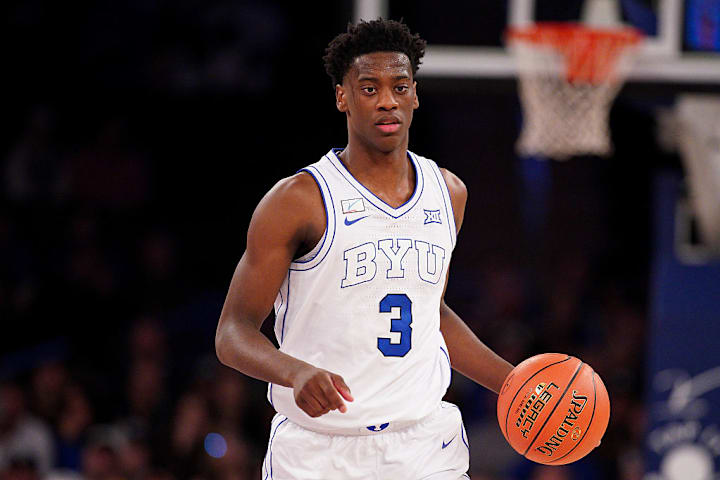
Height: 6’9
Weight: 210
Class: Freshman
Draft Age: 19
As the Atlanta Hawks turn the page on the Trae Young era and reorient the roster around Jalen Johnson, AJ Dybantsa would make for one hell of a get at No. 3. The Derik Queen trade has panned out nicely for the Pelicans so far — the kid can ball — if this is how the cards fall, New Orleans may be stewing in regret for the next decade. Dybantsa feels like the easy No. 3 right now, but he’s just as easily No. 1 in most other years. That level of bursty, dexterity and shot-making talent at 6-foot-9 does not come around often.
Dybantsa needs to figure it out on defense, where he has all the tools but none of the fire in his belly, but there’s significant upside there. Offensively, he’s a better passer than he gets credit for, but comes alive most plainly as a scorer. Dybantsa would thrive in an up-tempo partnership with Johnson, giving the Hawks two big wings who can self-create, pressure the rim and generate advantages with a dizzying blend of athleticism and skill. The ceiling here is as high as any player in the draft.
4. Brooklyn Nets: Caleb Wilson, F, North Carolina
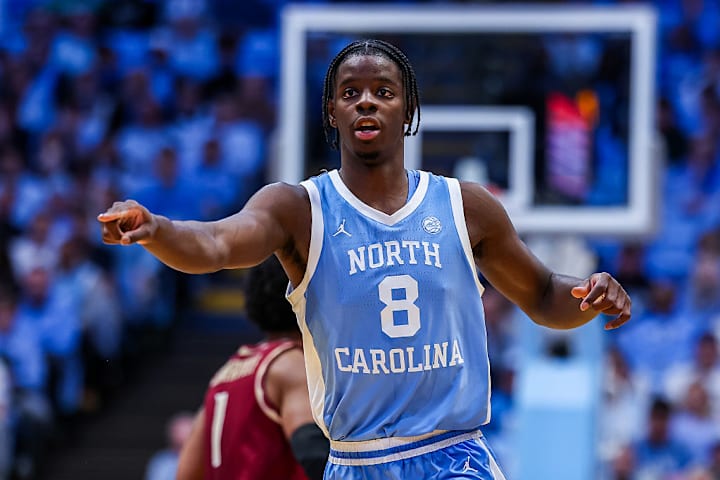
Height: 6’10
Weight: 215
Class: Freshman
Draft Age: 19
Brooklyn would sure love to crack the top three, but No. 4 is an excellent consolation prize this season. Caleb Wilson is putting together a monster freshman campaign at UNC, just wreaking havoc with his length, agility and aggression. There isn’t a better defensive prospect in this class. Wilson is a vacuum on the glass and a hellacious off-ball roamer, just as comfortable picking up weak-side blocks as he is switching on the perimeter and sliding his feet with guards. Few lottery prospects play this damn hard at all times.
The offensive progression is a more more slow-moving, but Wilson dunks everything and exhibits a high feel for the game, two strong star indicators. He has touch from the mid-range, which should eventually translate behind the 3-point line. The majority of his success will come off of cuts and offensive rebounds, and there are valid concerns about Wilson’s at-rim finishing when he’s not dunking. But all in all, he’s too efficient, too productive, too athletic, and above all else, too hard-working not to succeed. He’d complement Brooklyn’s gaggle of guards quite nicely.
5. Washington Wizards: Kingston Flemings, G, Houston
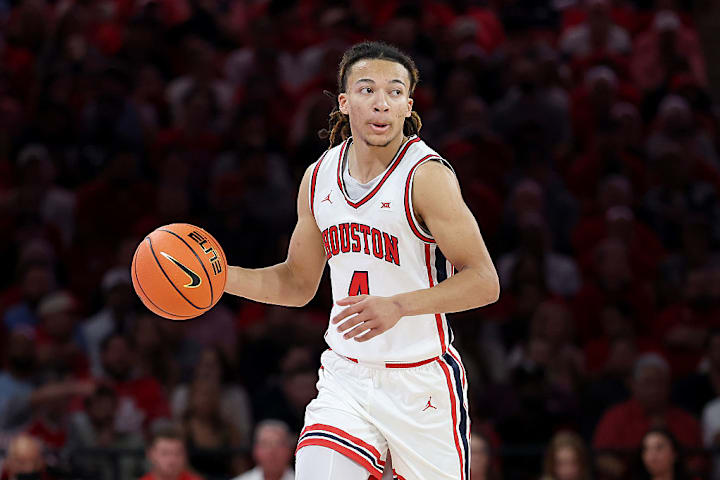
Height: 6’3
Weight: 190
Class: Freshman
Draft Age: 19
Kingston Flemings entered the season as a four-star recruit with muted one-and-done buzz, but he has quickly climbed the ranks to establish himself as, quite possibly, PG1 in a loaded point guard class (depending on your positional designation of Darryn Peterson, of course). Flemings is too quick and precise for most college defenses. He gets to his spots at will and finishes with almost comical efficiency at the rim, able to negate shot contests with touch and physicality.
Washington has invested considerable resources in the backcourt already. The Trae Young trade is a major pivot. That said, it’s unclear if Young is truly a building block for the future. Flemings most certainly is, and his blend of rim pressure and facilitating should pair nicely with the perimeter bombings of Tre Johnson. Flemings can also spend time off-ball and viciously attacking closeouts, so he’s scalable in a way that all truly great guards are. He’d become the head of the snake that this Wizards team presently lacks.
6. Sacramento Kings: Jayden Quaintance, C, Kentucky
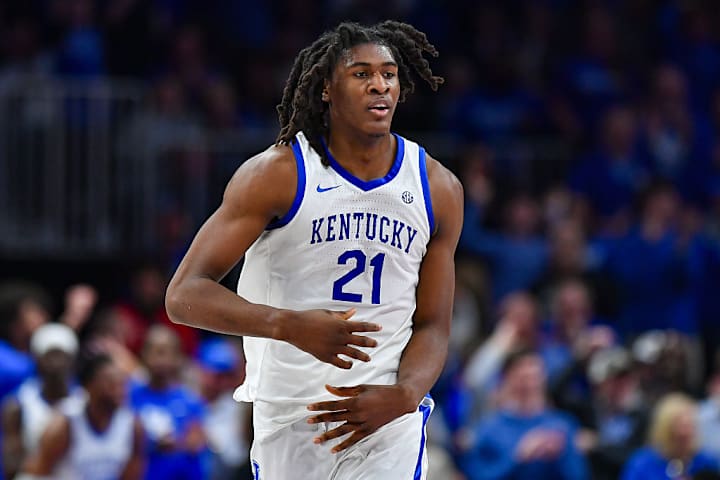
Height: 6’9
Weight: 225
Class: Sophomore
Draft Age: 18
It didn’t take long for Jayden Quaintance to remind folks of his potential, even in extremely limited minutes as he slowly reintegrates post-ACL surgery. At 6-foot-9, he’s built like an absolute tank — clearly much stronger than he was as a freshman, but still agile, and still only 18 years old. He’s a monster on defense, the sort of rim protection savant that can buoy a team’s scheme for the next decade. Few NBA teams need a defensive backbone more desperately than Sacramento.
He’s still figuring things out offensively, but Quaintance is teasing improved range and touch on his jump shots, to go along with his standard screen-setting and vertical spacing at the rim. Quaintance has the agility and strength to face up, beat slow-footed bigs off the dribble, and throw his weight around in the post. There is some fun, funky, hub-like upside as Quaintance refines his skill set and becomes more comfortable in Lexington. The defense alone keeps him pegged in the lottery, but don’t sleep on the two-way upside here. It’s considerable.
7. Oklahoma City Thunder (via LAC): Yaxel Lendeborg, F, Michigan
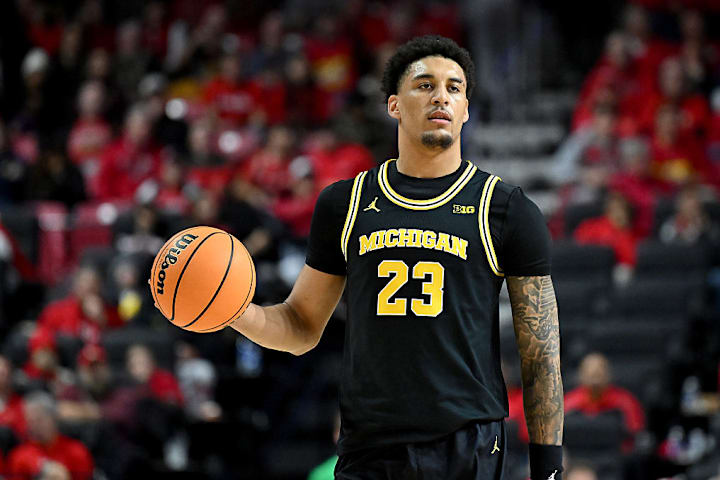
Height: 6’9
Weight: 230
Class: Senior
Draft Age: 23
It’s generally fair to fade 23-year-olds this high in the draft, but Yaxel Lendeborg feels like an exception to the rule. He’s so polished, so well-rounded in his contributions, that he should translate immediately as a high-level rookie. That feels like the right use of a lottery pick for OKC, a team with ongoing championship aspirations. OKC has its stars in place; Lendeborg can step in and hit 3s, finish with superb efficiency at the rim, connect dots as a passer, and muck things up with his rangy, high-IQ defense.
Lendeborg very much fits the M.O. of this Thunder squad. He’s multi-faceted; comfortable scoring on spot-ups and cuts, but also able to put the ball on the floor and exploit mismatches. He’s a high-volume rebounder and a legitimate help-side rim protector; he’s switchable on defense and scalable on offense. The criticisms are few and far between, except for that he’s 23 and might have reached a relative peak. When the peak is this high, however, there’s not much to worry about, especially for a team hoping to incorporate immediate, high-level role players into a winning apparatus like OKC.
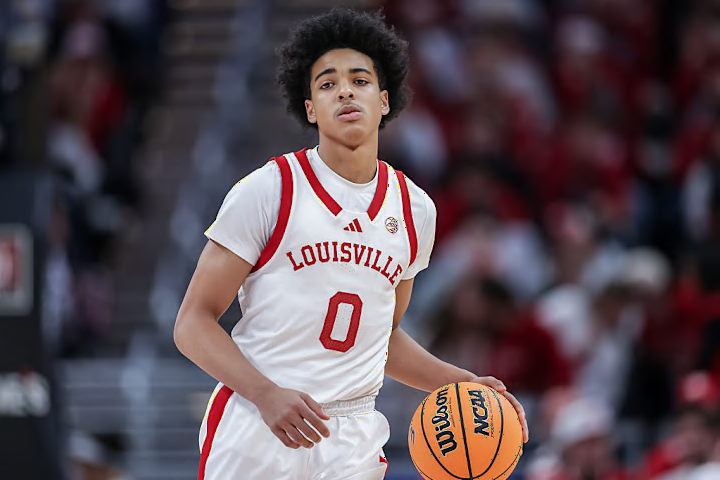
8. Dallas Mavericks: Mikel Brown Jr., G, Louisville
Height: 6’4
Weight: 172
Class: Freshman
Draft Age: 20
Dallas finally exorcised Nico Harrison and appears ready to reorient its timeline around Cooper Flagg. That means Anthony Davis (if he’s even still around) and Kyrie Irving shouldn’t factor into their draft plans all that much. To that point, the Mavs need to get Flagg a proper point guard to shepherd this offense into the future. Flagg is quickly becoming the all-around beast we saw at Duke, but he’s at his best when teammates can feed him favorable looks and tilt the defense to his liking. Enter Mikel Brown Jr.
There will be skeptics who cite Brown’s lackluster efficiency to date, which is fair. But even with a lot of shots rimming out, Brown has been wildly impactful for Louisville. He’s a brilliant playmaker, probing out of pick-and-rolls, firing bullets with pinpoint accuracy from either hand. The 3-point shooting will self-correct eventually. He attempts a lot of difficult shots, but the defense respects him, and the gravitational pull is thus effective. The deep range on Brown’s pull-ups, combined with his speed and physicality on drives, despite a thin frame, gives him so many options on a given possession. The whole floor is available to Brown, as his vision and skill combo is special. Dallas would love, love, love this outcome.
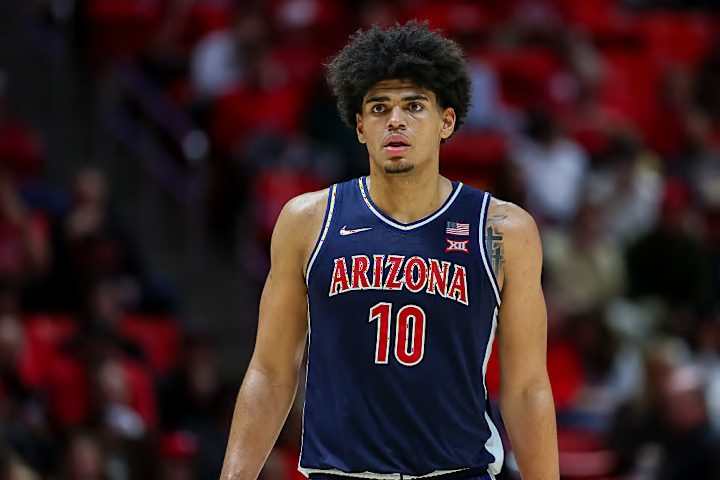
9. Oklahoma City Thunder (via UTA): Koa Peat, F, Arizona
Height: 6’8
Weight: 235
Class: Freshman
Draft Age: 19
If OKC ends up with two lottery picks, the rest of the NBA can probably pack it up and punt for a few years. But in this instance, Koa Peat joins Yaxel Lendeborg in OKC, giving the Thunder a pair of malleable, high-feel forwards to fold into the frontcourt game plan next to Chet Holmgren and Thomas Sorber long term. Peat still doesn’t shoot 3s much at all, which is a detracting factor, but the rest of his game is so fine-tuned, and he’s such an established winner (Arizona is undefeated as of this writing), that it becomes hard to bet against him.
Peat has settled into a mostly complementary role at Arizona, which should ease his transition into OKC’s hyper-competitive environment. He has the physicality and footwork to create offense from elbow and operate as a hub, but he’s also an attuned cutter and connector. He’s a sharp passer for his position, a competitive (if ultimately somewhat limited) defender, and the sort of small things, dirty work expert that can help OKC right away, with plenty of upside to grow into.
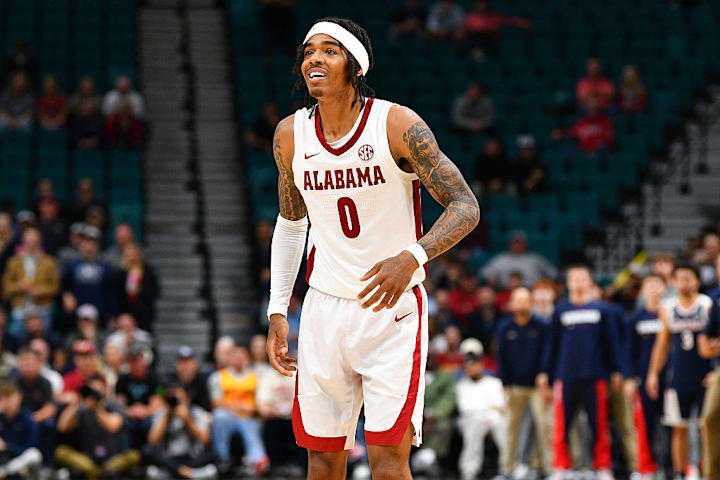
10. Milwaukee Bucks: Labaron Philon Jr., G, Alabama
Height: 6’4
Weight: 177
Class: Sophomore
Draft Age: 20
Milwaukee continues to cling to Giannis Antetokounmpo for dear life, and he just might let them. The ascent of Ryan Rollins has supplied one of the few bright spots of this season for the Bucks, but there is still a glaring need in the backcourt post-Damian Lillard. That sets the stage for someone like Labaron Philon, who has made quite the sophomore leap at Alabama. Viewed as a fringe first-round pick a year ago, Philon has addressed NBA concerns and blossomed as Bama’s primary creator in lieu of Mark Sears. Now he feels more like a lottery pick.
Philon’s slippery handles and slick playmaking were big selling points last season, but he struggled to finish at the rim and didn’t attempt enough 3s to comfort NBA scouts. Now, Philon has cranked up the volume on perimeter shots — both pull-ups and spot-ups — and he has added noticeable lower-body strength, allowing him to handle contact and finish among the trees, at the rim, more effectively. It helps that he is also an active defender, despite a somewhat spindly frame. The Bucks can hand the keys to Philon early on; he should make life easier for Giannis, or give them a solid building block if the two-time MVP departs.
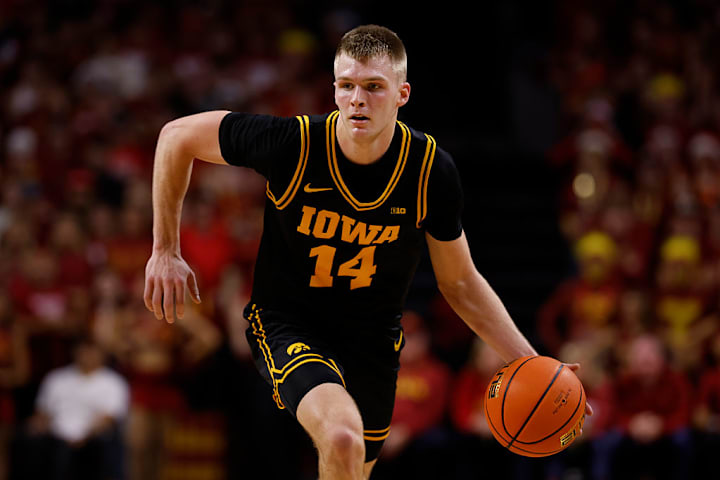
11. Portland Trail Blazers: Bennett Stirtz, G, Iowa
Height: 6’4
Weight: 180
Class: Senior
Draft Age: 22
Portland can’t rely on Jrue Holiday forever and it’s unclear what exactly Damian Lillard has left in the tank. It’s too soon to close the book entirely on Scoot Henderson, but Portland’s recent dealings seem to indicate a lack of confidence. All is that to say, a solid point guard would do a lot of good in Portland, and Bennett Stirtz feels like a damn near perfect fit. He can share the floor with the Blazers’ other guards and grease the wheels around Deni Avdija, who has rapidly emerged as Portland’s centerpiece.
Stirtz is an oddball lottery prospect in that he’s an older guard with clear weaknesses and limited athleticism. He’s an active, attentive defender, especially off-ball, but he’s not going to stonewall NBA athletes at the point of attack. He’s also the sun around which Iowa’s offense orbits, and yet he struggles to turn the corner and pressure the rim against high-level competition. Even so, Stirtz is a brilliant playmaker, a fearless shot-maker, and just too smart to fail. At least it feels that way. He’s a master manipulator and a great elevator of teammates. He can bomb 3s, pepper the mid-range, and make sure Portland’s offense is always running smoothly.
12. San Antonio Spurs (via ATL): Hannes Steinbach, F, Washington
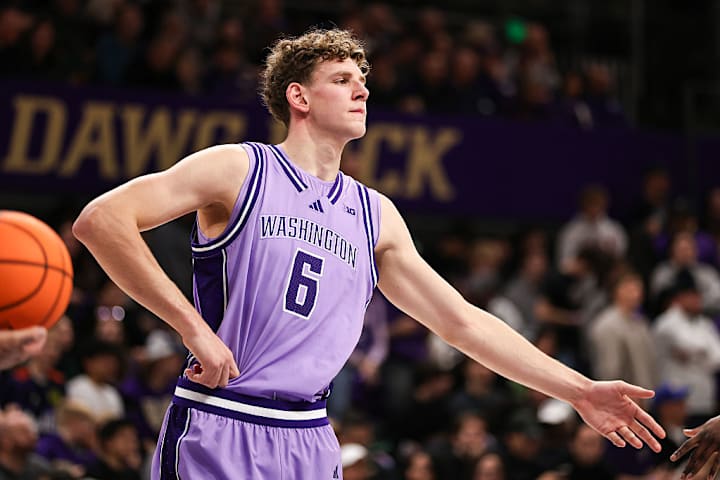
Height: 6’9
Weight: 220
Class: Freshman
Draft Age: 20
The San Antonio Spurs are still in the lottery, and still adding useful talent. With their backcourt full, San Antonio pivots to the frontcourt and brings in Hannes Steinbach to partner with Victor Wembanyama. This is damn near the perfect setup for Steinbach, whose limitations as a rim protector are offset by San Antonio’s all-galaxy defensive backbone. Meanwhile, his prodigious rebounding and mastery of small things on offense should carry weight for a Spurs team ready to compete.
Steinbach is so physically mature, with tree-trunk legs and a sturdy frame that he uses to full effect on the glass and in the post. Steinbach has a knack for establishing position and never relinquishing it. He can also catch everything, with sticky hands that allow him to function as a wide receiver on the fast break and a physical tight end on paint catches. Steinbach is still developing as a shooter, but the touch is promising. In the meantime, his screen-setting, interior finishing and connective passing would pay off immediately in San Antonio.
13. Chicago Bulls: Aday Mara, C, Michigan
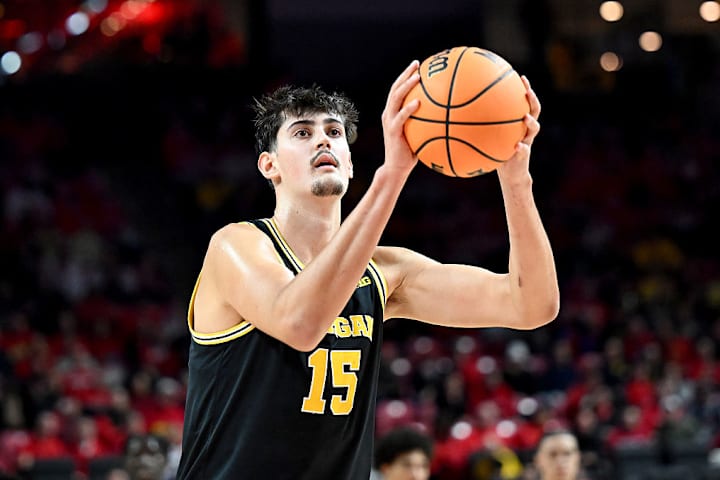
Height: 7’3
Weight: 240
Class: Junior
Draft Age: 21
As Chicago ponders life after Nikola Vučević, few prospects are more appealing — on paper — than Michigan mountain Aday Mara. The junior from Spain has ascended to new heights in Michigan after a couple wayward seasons at UCLA. Michigan has fully empowered Mara, not only as a rim protector, but as an offensive hub in the post. Mara will primarily score on dump-offs and physical bullying at the rim, but he’s an incredible processor. From touchdown passes in transition to brilliant, no-look dimes to the backdoor cutter, he can make — and execute — every read.
Chicago has prioritized playing fast, which is not necessarily Mara’s style. But the outlet passes will help, and he gives the Bulls a defensive anchor they currently lack. Billy Donovan’s teams tend to defend above their means. Mara makes it so that Chicago can make real, meaningful progress on that side of the ball. Mara comes in ready to contribute, with a blend of size and IQ we rarely see.
14. Memphis Grizzlies: Darius Acuff Jr., G, Arkansas
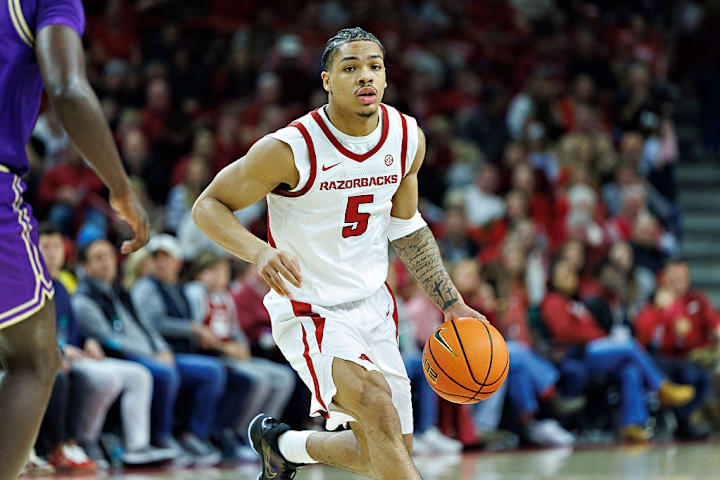
Height: 6’2
Weight: 180
Class: Freshman
Draft Age: 19
The Ja Morant era in Memphis is destined to end sooner than later. Really, as soon as the Grizzlies can locate a viable off-ramp. It makes sense to start scouting potential replacements, as Acuff stands out from the pack. The Arkansas freshman burst out of the gate and has put together several memorable performances against top competition. Concerns about his size and lack of defensive utility will persist, as is the nature of today’s game. But offensively, Acuff is one of the most complete guard prospects in this class.
Acuff checks pretty much all the boxes. He’s an explosive, physical driver when he wants to be. He’s bombing 3s at a high clip and doing so efficiently. The assist-to-turnover splits are incredible for a frosh. Acuff can get to his spots effortlessly and he poses a varied threat at every level. The defensive concerns are very real — his stock numbers are frighteningly low — but if Acuff can improve even marginally in that department, he’s a potential star initiator.
15. Golden State Warriors: Cameron Carr, G, Baylor
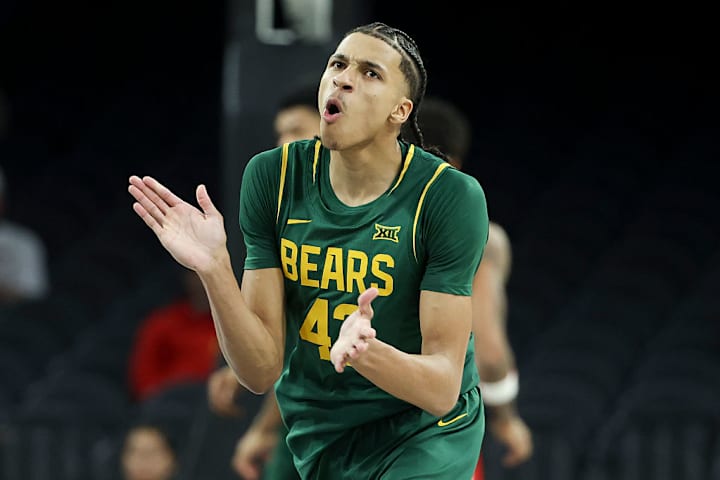
Height: 6’5
Weight: 175
Class: Junior
Draft Age: 21
Cameron Carr mostly rode the bench in his first two seasons at Tennessee, but the junior has broken out at Baylor. There’s a lot to like about Carr, an absolute flamethrower from 3-point range, with long arms, plus athleticism, and promising instincts as a help-side defender. Golden State tends to embrace shooting as a core tenet of their offensive philosophy, in case you haven’t realized. Carr can step in and produce in the Buddy Hield role: bombs away, with enough off-ball movement, rim finishing, and straight-line driving to round out his profile.
There are some defensive concerns with Carr, whose block rate feels a bit unsustainable, and whose lack of playmaking or stout on-ball defense on the perimeter is a limiting factor. But, he’s athletic enough to make it work. He plays hard, and he plays with a spunk this aging, oftentimes sad Warriors team could really use. The winds of change are blowing in Golden State, but Carr feels like a keeper.
16. Atlanta Hawks (via CLE): Thomas Haugh, F, Florida
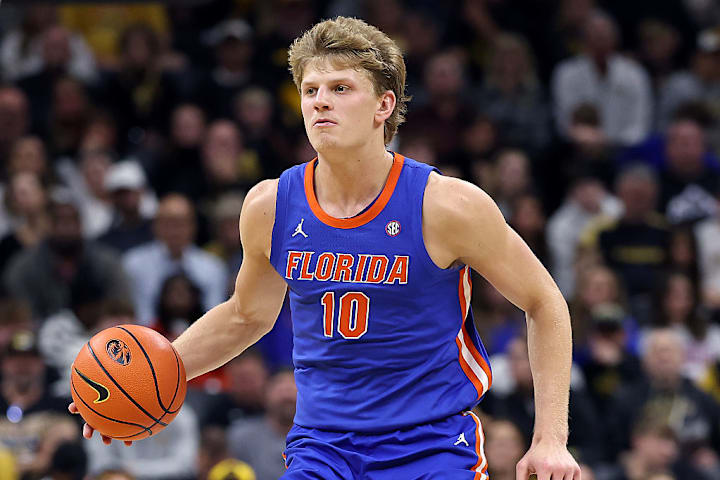
Height: 6’9
Weight: 210
Class: Junior
Draft Age: 21
In addition to AJ Dybantsa at No. 3, Atlanta bolsters its frontcourt depth with Florida breakout Thomas Haugh. A dominant NCAA Tournament run last season put Haugh on the map, but he has delivered thoroughly on expectations as a junior. With plus size, athleticism and off-ball instincts, Haugh checks a lot of boxes and should fit into a variety of lineups. He’s versatile on defense and he doesn’t need to dominate touches to produce as a scorer.
Haugh’s 3-point volume is way up this season. Moreover, he’s slowly adding a bit of on-ball variety to his profile. While still very much not a primary weapon, Haugh has the coordination to attack closeouts and flow into mid-range pull-ups. He’s an efficient, acrobatic finisher at the rim. He knows when and where to be at all times. The passing numbers aren’t sexy, but Haugh generally sees the floor well and operates effectively within a team context. No matter which direction Atlanta’s roster heads next offseason, Haugh ought to fit like a glove.
 ☄️WELCOME TO FACENOTEE.COM🕳️👍🏿
Leave a comment