
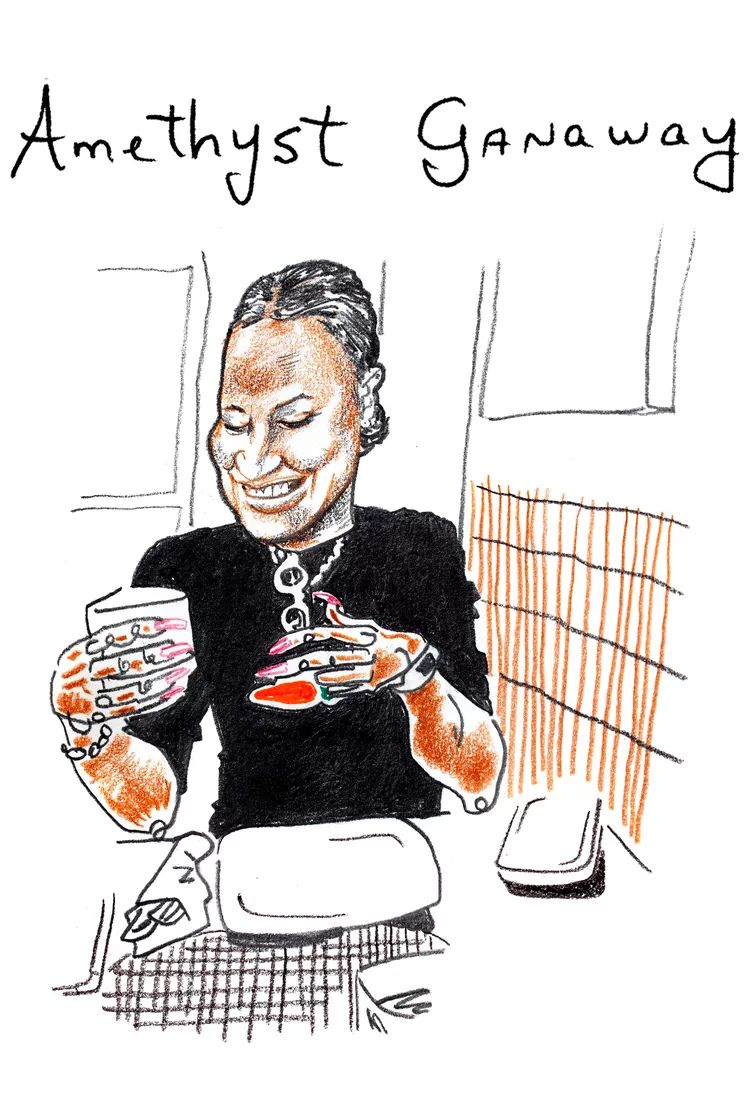
Even today, the thread of connection between Gullah Geechee cuisine and West Africa remains bracingly direct. Last year, Charleston saw the opening of Bintü Atelier, a restaurant whose chef, Bintou N’Daw Young, was born in Senegal. When Amethyst Ganaway first ate at Bintü Atelier, she ordered thiéboudienne — a Senegalese classic in which a mound of jollof rice is surrounded by a delicious orbit of fish and vegetables — and instantly noticed the echoes. “I thought it was red rice on the table,” Ganaway says.
A tourist visiting New Orleans would know, probably without prompting, that a trip to the Crescent City is not complete without feasts full of gumbo, jambalaya, shrimp étouffée, and red beans and rice. Such food is baked into the folklore of the city. But in Charleston, particularly the tourist-luring precincts of the peninsula, Gullah cuisine does not dominate the local conversation in the same way. Instead, it feels curiously invisible. To Ganaway, there’s a simple reason for that: “White people!” she says, throwing up her hands. “They’re not going to be overtly racist because Charlestonians have too much class. What they’ll do is ignore you.”
And yet Ganaway admits that after a few years of living elsewhere, she sensed a deep love for Charleston and its cuisine pulling her back. “I moved home because the water was calling me home,” she says. “I’m where I need to be at. Now there’s me and my friends calling each other — ‘Hey, how do you make hoppin’ John?’ For me, it’s about now having the awareness of how special it is.” As Ganaway strolls through Charleston’s fastidious French Quarter on a warm winter day, she finds herself grappling with the ways the city can simultaneously disturb and delight. “It’s a beautiful place,” she says. “A beautiful place. With a lot of history that people don’t know.”
Back in her living room in Awendaw, Charlotte Jenkins would be inclined to agree with all of that, both the deep love and the deep frustration with the city’s lingering prejudices. Decades ago in the South, segregation meant that Black and white folks did not dine in the same restaurants. “And Charleston — I don’t see a lot of changes,” Jenkins says. “There’s something about Charleston — they can’t let go.”
You must be logged in to post a comment.