|
Getting your Trinity Audio player ready…
|

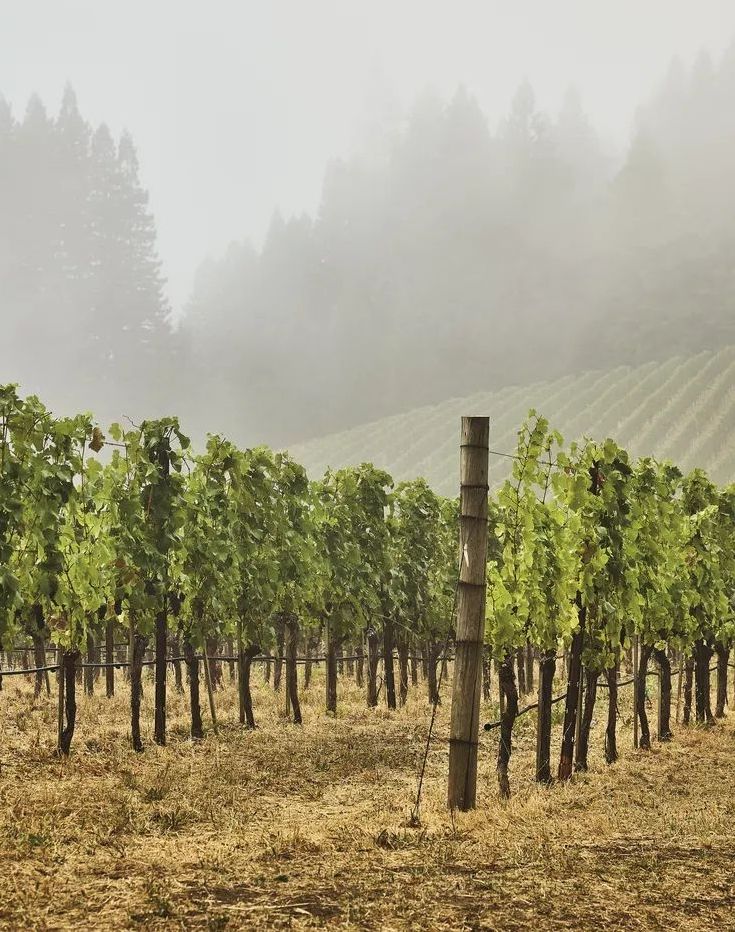
Hirsch Vineyards is only about 10 miles from Peay, but it took me an hour to drive there. The western Sonoma coast is not a place for fans of straight roads. But it is stunningly dramatic in its beauty, full of dense redwood forests, windswept ridges, and hidden vineyards — utterly unlike the manicured prettiness of somewhere like Napa Valley. (Although the best place to try Hirsch wines is at their cozy tasting room in Healdsburg, because the winery is not open to the public.)
It was a sunny day, so rather than taste indoors, winemaker Jasmine Hirsch and I took several bottles to the top of Block 16, a small amphitheater of vines lying at the western edge of the property. “The land here is folded,” she explained. “It’s like if you spread out a thick blanket on the floor and mushed it all together. Nothing’s flat. We have every single aspect, every single exposure. And where the fog gets to, and where it doesn’t, and the reason we get so much rain here, that’s all tied to the topography. And the topography was produced by the seismic activity of the fault.”
For that reason, Hirsch’s flagship Pinot cuvée is named San Andreas Fault. “My dad always likes to say that our property was defined by the fault, so that’s what he named it,” Jasmine explained. Hirsch Vineyards was established in 1980 by her father, David, on the site of an old sheep ranch, and it is inarguably one of California’s greatest Pinot Noir vineyards; Jasmine now makes the wine, while David oversees the viticulture.
The San Andreas Fault cuvée is a blend of different blocks from the estate’s 72 acres of vines, bright with red berry fruit, layered, and complex. “It’s the entire vineyard in one glass,” Jasmine said as we looked out across the vines. The sun flamed in my glass as I took another sip. Past the rows of vines, the land dropped right down to the fault line, then climbed to the next ridge. Then, nothing but the Pacific. “On a clear day from here you can see whitecaps,” she said.